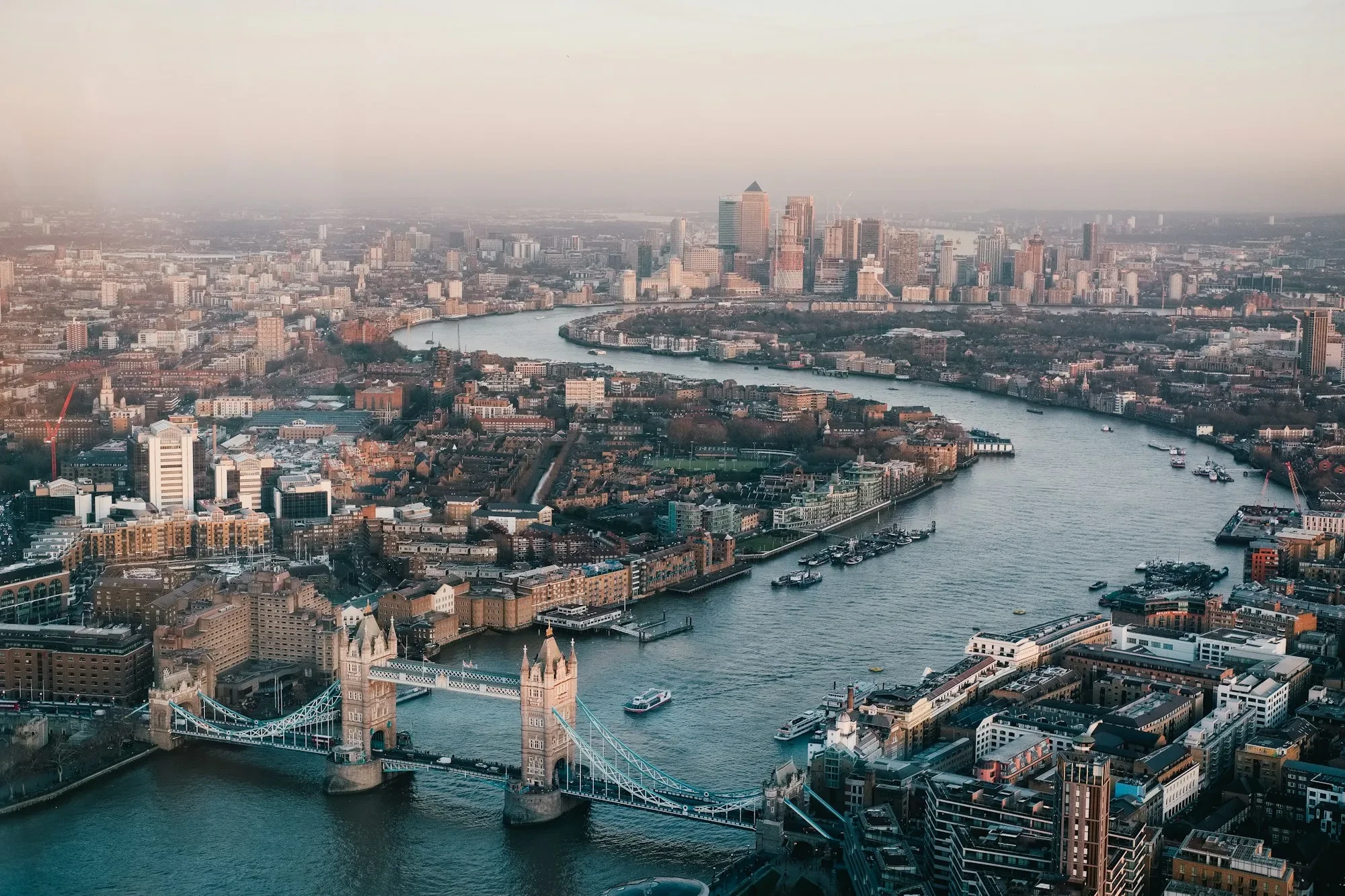
London sits on the Thames in southeast England, spanning 33 boroughs across 600 square kilometres with a population of 9 million. It operates as a federation of villages: the City of Westminster holds the parliament and palaces, the City of London is the financial core one square mile in area, and everywhere else ranges from dense Victorian terraces to open parkland. 3 days covers the core landmarks and one neighbourhood deep-dive; add 2 more for day trips and outer boroughs.
🕐
Best Time
May–September
💷
Currency
Pound Sterling (£)
🗣️
Language
English; no translation needed anywhere in the city
🚇
Transport
Tube, Bus, Elizabeth line, Overground
🌡️
Climate
Temperate, frequent rain year-round
Most transatlantic flights land at Heathrow. From Heathrow, the Heathrow Express takes 15 minutes to Paddington and costs ~$32 one-way, fast but overpriced for most trips. The Elizabeth line covers the same route in 45 minutes for ~$16 and drops you at Bond Street, Tottenham Court Road, and Farringdon with no change. The National Express bus takes 60–75 minutes to Victoria Coach Station and costs ~$8; perfectly usable with carry-on luggage during off-peak hours. From Gatwick, the Gatwick Express train runs 30 minutes to Victoria for ~$22. The trap: metered black cabs from Heathrow cost $70–100 or more at airport rates, and there is no fixed-rate option. Uber and Bolt both operate legally from the pickup zone and will cost roughly $45–60 to central London depending on traffic.
Tap an Oyster card or any contactless bank card on the yellow reader at every Tube gate and bus door. Single Zone 1 fares run ~$4 peak and ~$3.75 off-peak; the daily cap for Zones 1–2 is ~$11.30 so you never pay more than that per day regardless of trip count. The break-even point is roughly 3 journeys in a single day. The Elizabeth line, which opened in 2022, runs from Heathrow and Reading through the central core to Shenfield and Abbey Wood; for tourists, it means fast cross-city travel without changing at Holborn or Bank. Use Citymapper rather than Google Maps for real-time disruption data and walking alternatives; it also works offline if you save the map. Uber and Bolt both work across the city; a cross-city journey (e.g. Shoreditch to Notting Hill) costs ~$20–30. If you board the Tube without a valid card or ticket and an inspector checks, the fine is ~$120 on the spot.
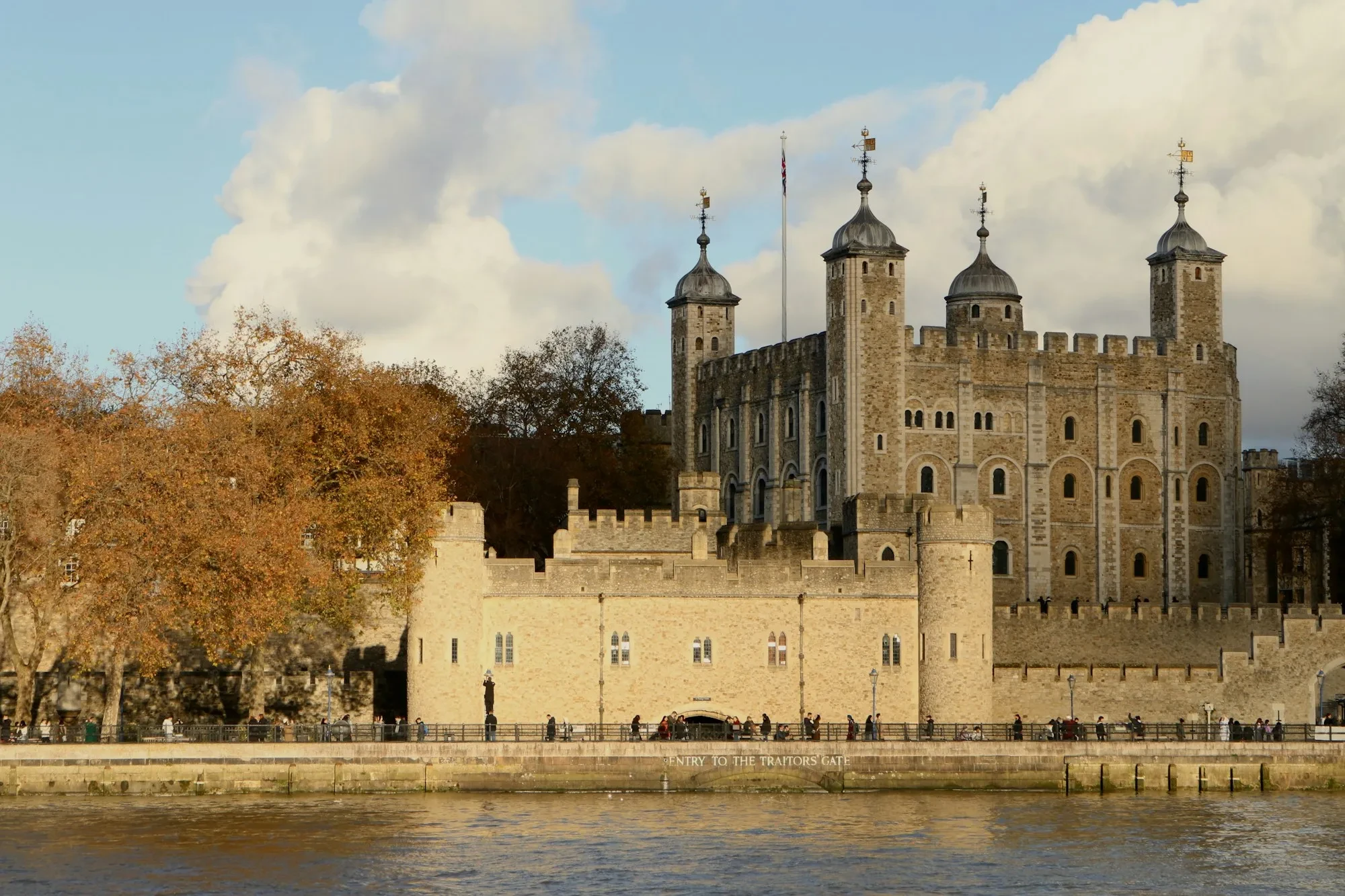
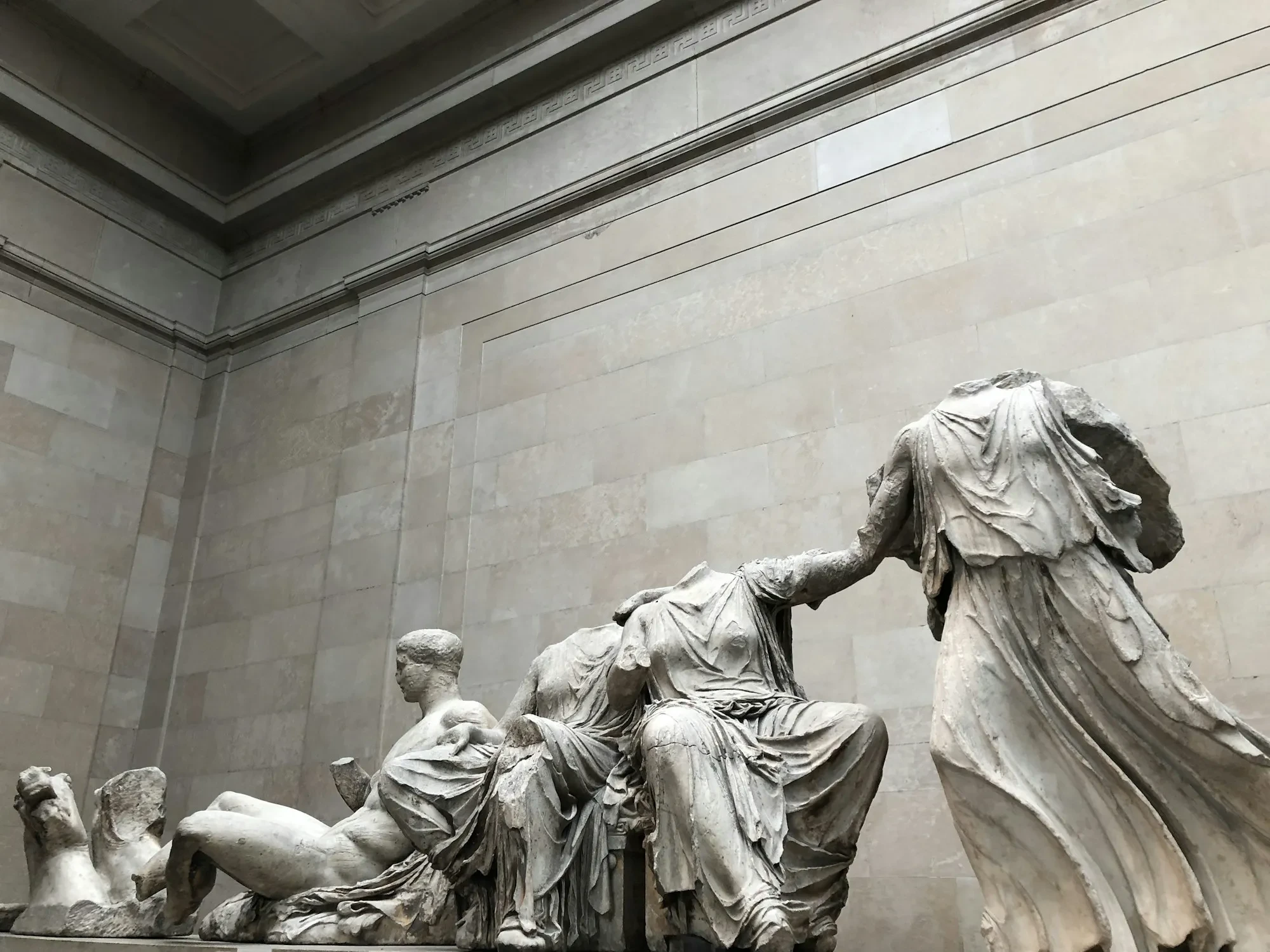
The British Museum holds 8 million objects on free public display including the Rosetta Stone and the Elgin Marbles, making it the single largest free cultural institution in the world by collection size. The Tower of London, built by William the Conqueror in 1078, houses the Crown Jewels (23,578 gemstones in total) behind 6-inch-thick glass. The Palace of Westminster's Elizabeth Tower (commonly called Big Ben, which is technically only the bell inside) completed a 6-year restoration in 2022 at a cost of $100 million. Beyond the landmarks, London operates at a scale that surprises most visitors: the Underground has 270 stations, the city has 3,000 parks, and from Tower Bridge to Heathrow is 27 kilometres by road, further than Manhattan to JFK times three.
-
Full English breakfast
$10–16
Two fried eggs, two rashers of back bacon, one link sausage, grilled tomato, baked beans, and toast on a single plate; the calorie math for a full day of walking.
Any greasy-spoon cafe on Berwick Street in Soho or on Bermondsey Street near London Bridge
-
Salt beef bagel
$6–9
Cured brisket sliced thick, layered into a plain bagel with yellow mustard and a gherkin. The recipe and the premises at Beigel Bake on Brick Lane have not changed since 1974.
Beigel Bake, 159 Brick Lane, open 24 hours every day of the year
-
Fish and chips
$12–20
Cod or haddock in a batter shell fried at 180°C, served with thick-cut chips and a wedge of lemon. The texture difference between fresh-fried and reheated is the single most important variable.
Fish! Kitchen at Borough Market, or any counter stall at Maltby Street Market on weekends
-
Grilled cheese toastie
$9–12
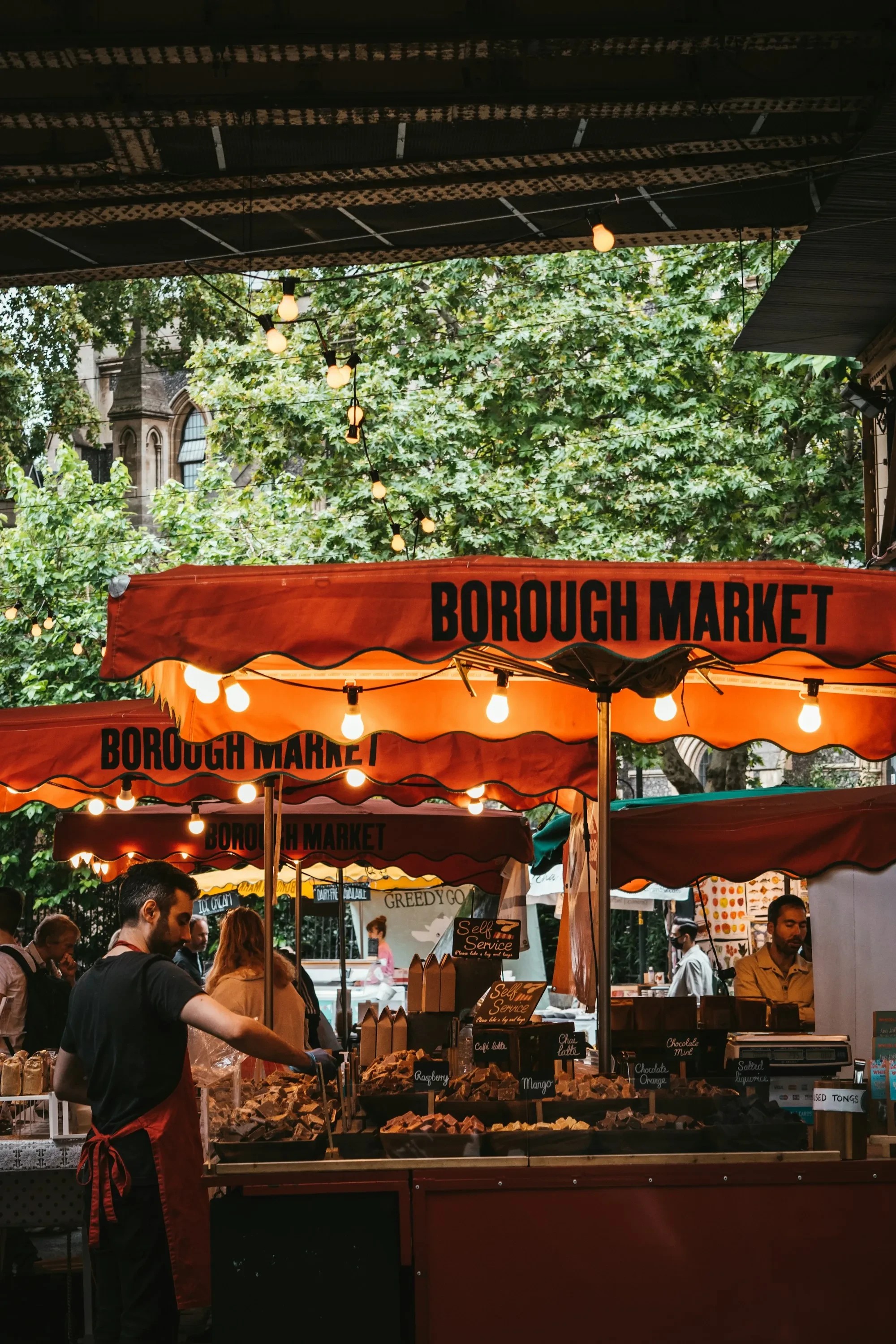
Montgomery cheddar, Ogleshield, and leeks pressed into sourdough on a flat-top iron. Kappacasein Dairy has been doing this at Borough Market for over a decade.
Kappacasein Dairy stall, Borough Market, Stoney Street, Thursday–Saturday
London is safe by major-city standards. Most tourist areas (Westminster, South Bank, Covent Garden, the City) are fine at any hour. Scam patterns to know: fake charity collectors near Oxford Street and Piccadilly Circus approach with clipboards and pressure tactics; decline and walk on. 'Student' art print sellers on the South Bank offer signed prints at $150–200 claiming the artist is present; the same prints sell online for $10. Rickshaw drivers outside Covent Garden and Leicester Square quote no price upfront and demand $80–120 for a 10-minute ride; always agree a price before boarding. At night, Peckham, Brixton, and parts of Hackney have higher street-crime rates than central London; stay on main streets after midnight. For licensed transport use Uber, Bolt, or the official black cab ranks; never get into an unlicensed car that approaches you outside a venue. Emergency hospital: University College Hospital, 235 Euston Road, NW1 2BU. Nearest Tube: Euston Square (Circle/Metropolitan/Hammersmith lines).
- Airalo UK eSIM costs ~$15 for 7 days of data; the Three network has the best central London coverage for pay-as-you-go
- Contactless bank cards work on every Tube gate and bus; you do not need a separate Oyster card if your card has a chip
- UK uses Type G plugs (3 square pins); a universal adapter works but the UK plug is physically large, so buy a flat-pin adapter to avoid blocking adjacent sockets
- Book Tower of London tickets online at least 2 weeks ahead; they sell out on peak weekends and the online price saves ~$5 vs. the gate
- Churchill War Rooms (Cabinet War Rooms) require advance booking in summer; the 2-hour self-guided audio tour is the correct way to see it
- US and EU citizens do not need a visa but the UK ETA (Electronic Travel Authorisation) is now mandatory before boarding; apply at gov.uk/eta, costs ~$13, takes minutes
- Backpacker ~$70/day: hostel dorm ($25–35), Oyster Zone 1–2 daily cap ($11), two market meals ($16–22), one free museum (British Museum, National Gallery, Tate Modern, V&A are all free)
- Mid-Range ~$140/day: 3-star hotel ($90–120), Oyster card ($11), three sit-down meals ($40–60), one paid sight such as Tower of London ($35) or Churchill War Rooms ($35)
- Comfort ~$280/day: boutique hotel ($180–250), black cabs or Uber ($30–50), fine-dining lunch and dinner ($80–120), skip-the-line access at all paid venues
South Bank: directly on the Thames between Waterloo and London Bridge; walking distance to Tate Modern, Borough Market, and the Shard. No Tube needed during daytime. The trade-off is that hotel prices have caught up with the location. Shoreditch: creative district with access to the Elizabeth line at Liverpool Street; louder on weekends due to street markets on Brick Lane and Spitalfields. Covent Garden: dead centre of the tourist map; premium pricing, loud at midday, much quieter after 9 PM. Notting Hill: residential and quiet with a Saturday market on Portobello Road; slow Tube connections east mean 30+ minutes to most major sights. King's Cross: St Pancras International is in the same building for Eurostar departures; the neighbourhood has changed significantly since 2015 with new restaurants and office development around Granary Square. Best value zone for mid-range hotels without sacrificing access.
- January–February: cheapest flights and hotel rates, fewest crowds at any major sight; cold (4–8°C) and grey but the museums are empty compared to summer
- June–August: peak season with 16 hours of daylight, school groups everywhere, Hyde Park and South Bank at full capacity; prices for accommodation spike 30–50% vs. winter
- September–October: the best balance of weather (15–18°C), post-school-holiday crowd levels, and manageable prices; this is the recommended window
- Book flights 8–12 weeks out for the best fares; Tuesday and Wednesday departures are consistently cheaper than Friday or Sunday
Windsor Castle is 35–40 minutes by South Western Railway from Waterloo to Windsor and Eton Riverside (~$17 return). The castle grounds cover 5 hectares and the State Apartments take 2–3 hours; the audio guide is redundant because the room labels and posted guides are detailed enough. Oxford is 55–65 minutes from Paddington on Great Western Railway (~$25–32 return). A half-day covers the Bodleian Library exterior and two or three colleges; the Bodleian reading rooms require advance booking. Brighton is 55 minutes from Victoria (~$20–25 return). The beach is shingle (not sand), the North Laine neighbourhood has independent shops and food stalls, and on weekday mornings before 11 AM the crowd level is manageable; weekends by noon are noticeably packed.
The current reality in London is that several of its most worthwhile experiences are either free or so poorly marketed they have no queues. The Sky Garden, a 43rd-floor glass garden inside 20 Fenchurch Street, has panoramic views over the City and the Thames with no entry fee, but free tickets are released every Monday morning for the following three weeks and are gone within hours; book at skygarden.london the moment they open. The Wellcome Collection on Euston Road is a free museum exploring the history of medicine with rotating temporary exhibitions; it rarely has more than 40 people in it on a weekday afternoon. Maltby Street Market, underneath the railway arches on Ropewalk in Bermondsey, runs Thursday–Friday evenings and Saturday–Sunday mornings; the produce and food stalls are the same suppliers as Borough Market at roughly half the price, and there is no tourist overhead.
Must Visit
Tower of London
Built in 1078 by William I, the Tower is a 4.9-hectare fortified complex on the north bank of the Thames. It has served as a royal residence, treasury, prison, and execution site over 950 years. The Crown Jewels are in the Waterloo Barracks at the north end; the moving walkway channels crowds past at a fixed pace, so step off to the side and you can stand in front of the Imperial State Crown as long as you need. Beefeater tours depart from the main gate every 30 minutes and last 45 minutes; they are genuinely informative and free with admission. Guerilla Tip: book the first entry slot at 9 AM on a Tuesday or Wednesday. The Crown Jewels vault is empty of other visitors for roughly the first 20 minutes.
Must Visit
British Museum
The British Museum holds 8 million artefacts from every period of human history, of which roughly 80,000 are on permanent free display. The Great Court is a 2-acre enclosed courtyard with a glass-and-steel roof designed by Norman Foster and is one of the largest covered public spaces in Europe. The Rosetta Stone is in Room 4, ground floor; it is behind glass but at eye level and close enough to read the three scripts. The Lewis Chessmen are in Room 40; the Lindow Man (a 2,000-year-old preserved body) is in Room 50. Guerilla Tip: enter from the side door on Montague Place rather than the main gate on Great Russell Street. The security queue is a third of the length even on peak days.
Must Visit
Tate Modern
Tate Modern occupies the former Bankside Power Station, a 200-metre brick structure on the South Bank. The Turbine Hall (the former boiler room) is 35 metres high and 152 metres long; it hosts large-scale commissioned installations that change annually and are always free. The permanent collection spans the 20th century: Picasso, Rothko, Bourgeois, and Hirst are all represented. The Blavatnik Building viewing platform on Level 10 gives a free 360-degree view of St Paul's Cathedral and Tower Bridge across the river. Guerilla Tip: the Level 10 viewing platform closes 15 minutes before the building. Arrive by 5:45 PM on a clear evening for an uncrowded sunset view.
Must Visit
Borough Market
Borough Market operates under the railway arches between London Bridge and Southwark Street and has been a food market in some form since the 13th century. The full market runs Thursday, Friday, and Saturday; a smaller version opens Monday–Wednesday. Kappacasein's grilled cheese toastie, Brindisa's chorizo rolls, and the Gujarati Rasoi veg curries are the three most consistently recommended stalls. The market is 10 minutes on foot from London Bridge Tube (Jubilee and Northern lines). Guerilla Tip: arrive Thursday at opening (10 AM) for a relaxed experience. Saturday by noon is dense with visitors and prices spike at cooked-food stalls.
Must Visit
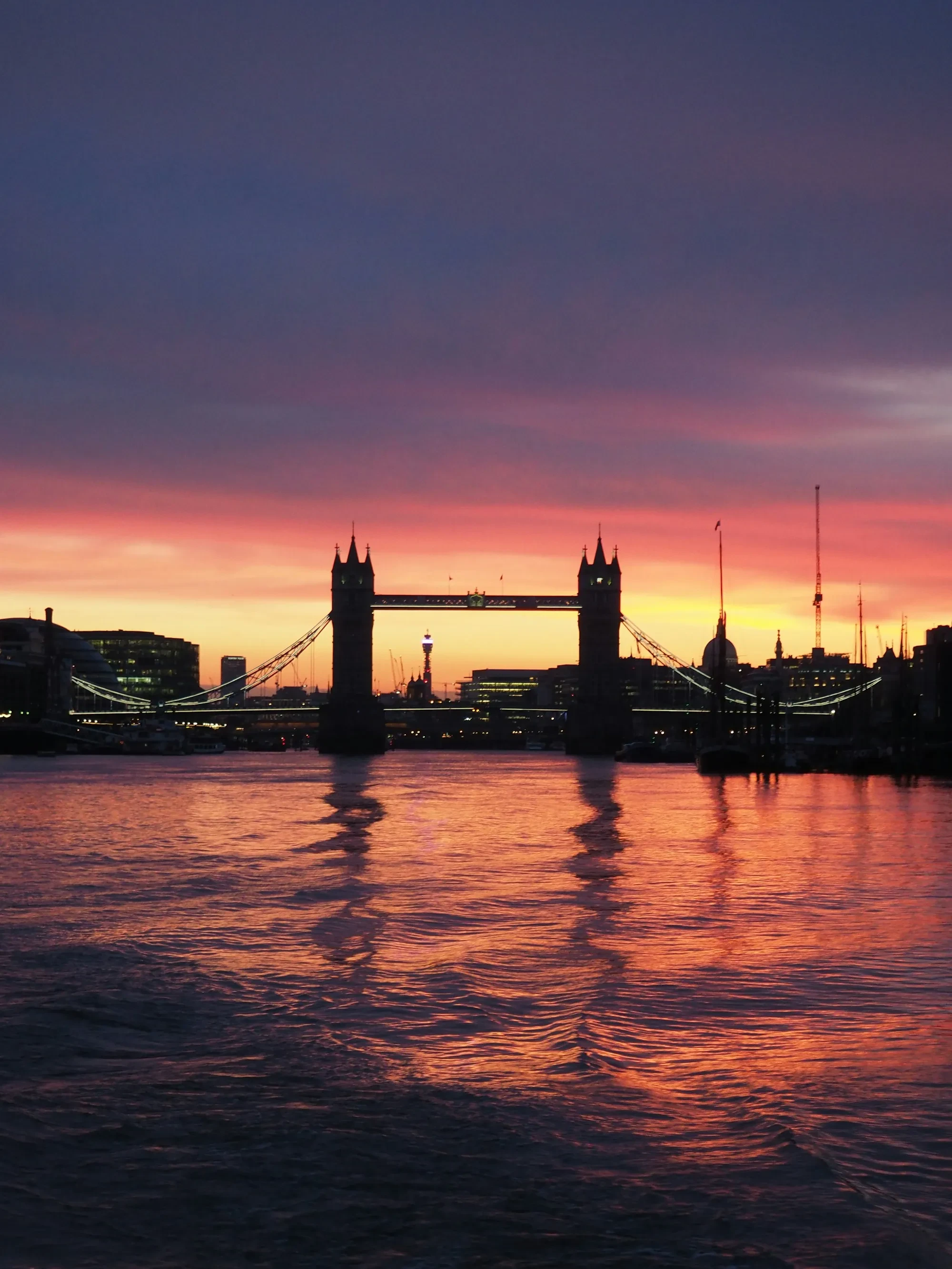
Tower Bridge
Tower Bridge opened in 1894 and still raises its two 1,000-tonne bascules for river traffic roughly 2000 times a year. The bridge is free to walk across; the Tower Bridge Exhibition (which includes the glass walkway 42 metres above the Thames and the Victorian engine rooms) costs ~$22 for adults and takes 45–60 minutes. The lift schedule for bridge openings is published at towerbridge.org.uk; if you time your visit to a lift, you can watch from the south bank free of charge. Guerilla Tip: the best photograph of the bridge is from the north bank footpath east of the bridge at sunset, framing it with the City skyline behind.
Must Visit
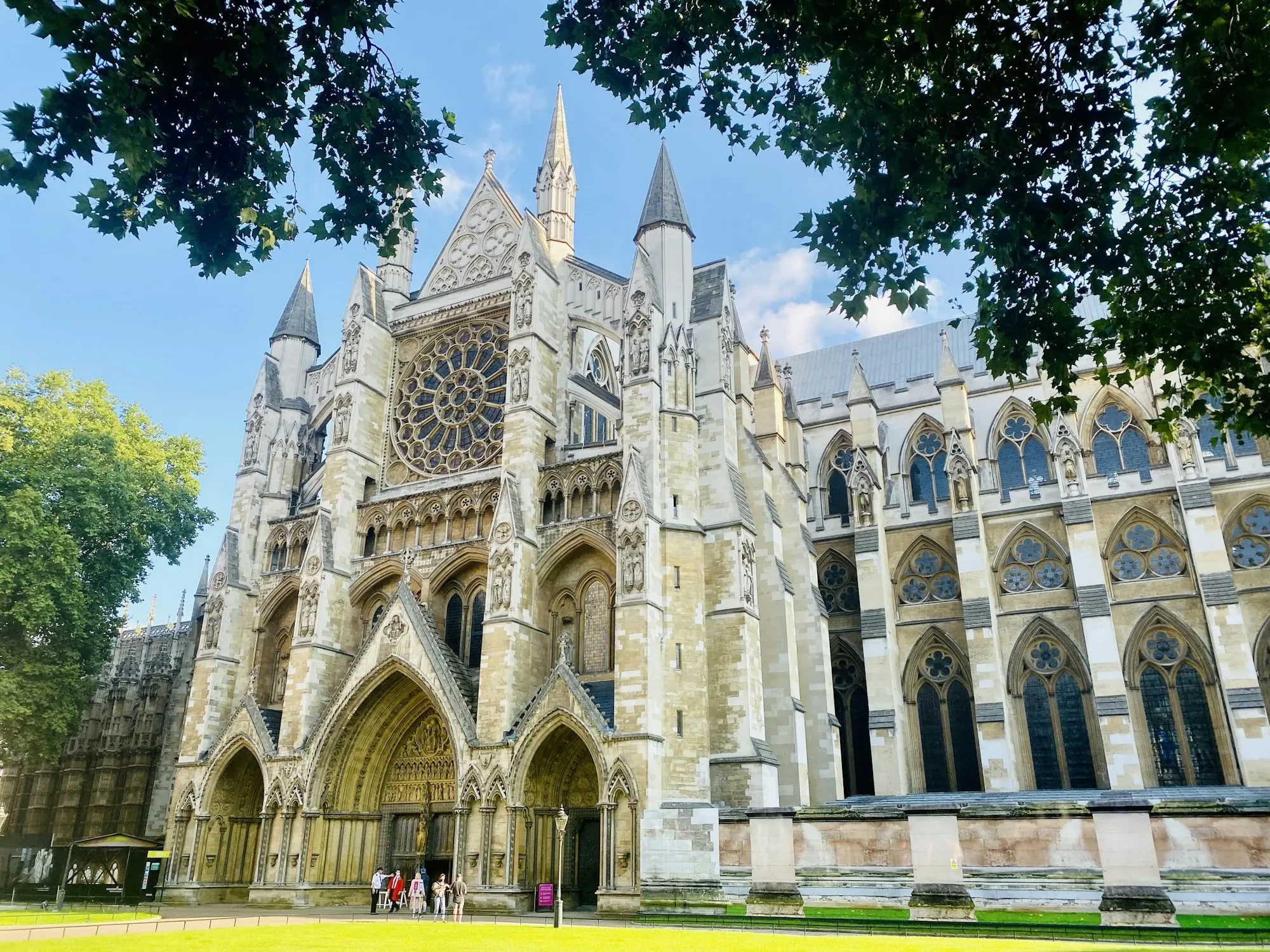
Westminster Abbey
Westminster Abbey has been the coronation church for every English monarch since William I in 1066 and contains the tombs of 17 sovereigns as well as Darwin, Newton, and Dickens in Poets' Corner. Entry costs ~$35 and includes an audio guide narrated by Jeremy Irons, which covers the key stops in 75–90 minutes. The nave is free to enter for prayer during services; check the website for times. Guerilla Tip: the cloisters on the south side are included in the ticket but most visitors miss them. The octagonal Chapter House and the medieval tiles on its floor date from 1255 and are the least crowded part of the whole complex.
- Tipping: 10–12.5% at sit-down restaurants; service charge is often added automatically to the bill, so check before adding more. Never tip at cafes, fast food counters, or market stalls
- Tap Water: safe to drink from any tap in London; Refill app maps free water stations across the city. Most cafes will refill a bottle if you ask
- Dress Code: no formal dress code for any tourist sight; Westminster Abbey and St Paul's ask for modest dress (covered shoulders, no shorts in the nave), so a light jacket covers both requirements
- Public Toilets: free inside all major museums and department stores (Selfridges, John Lewis, Marks and Spencer); some Tube stations charge $1.30; use contactless to pay
- Oyster minimum balance: your Oyster card must hold at least $2.60 or the gate will decline it mid-journey; top up at any Tube station or via the TfL Oyster app
- Photography: Tower of London and Westminster Abbey permit non-flash photography for personal use; commercial photography requires written permission