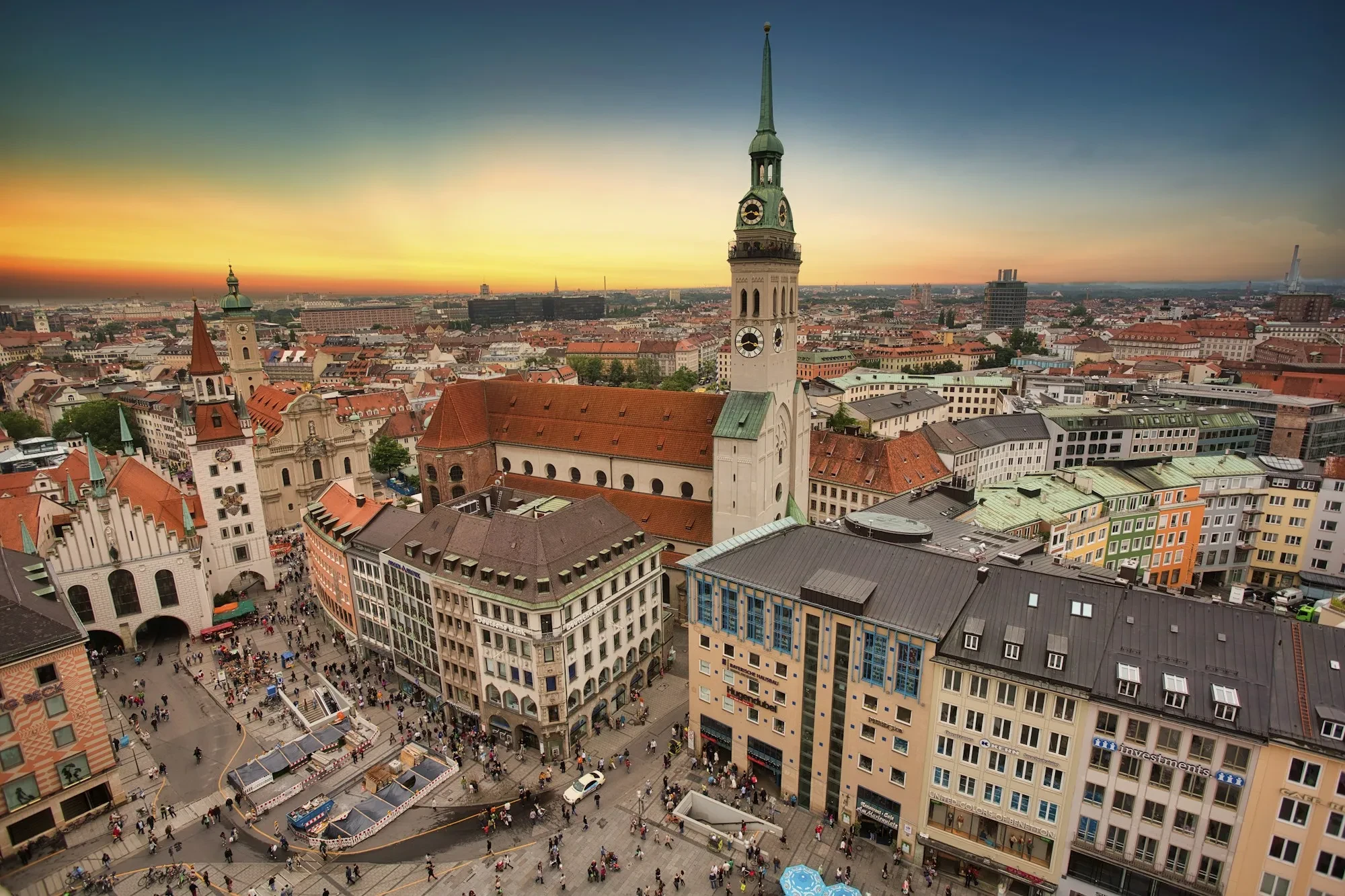
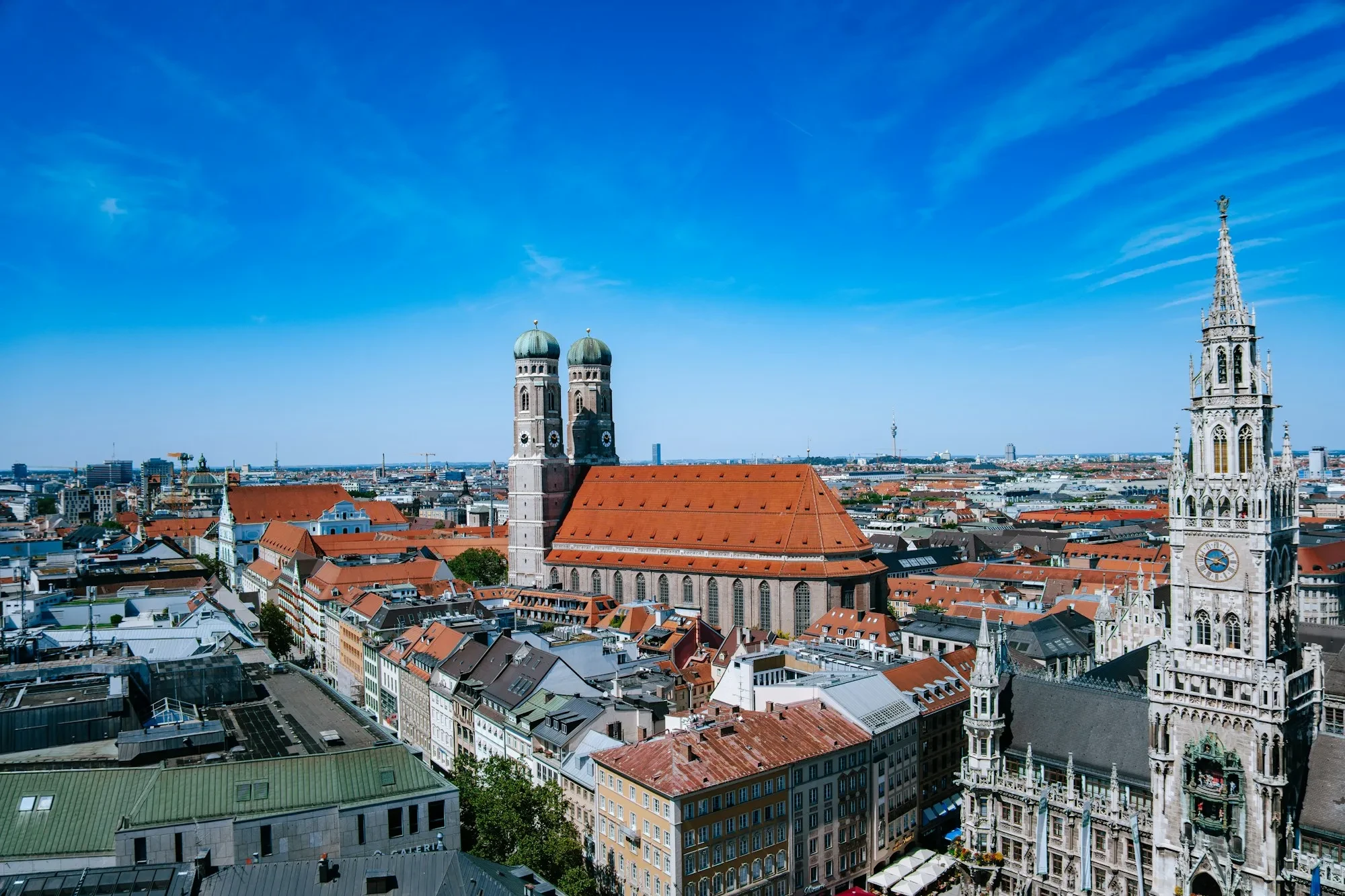
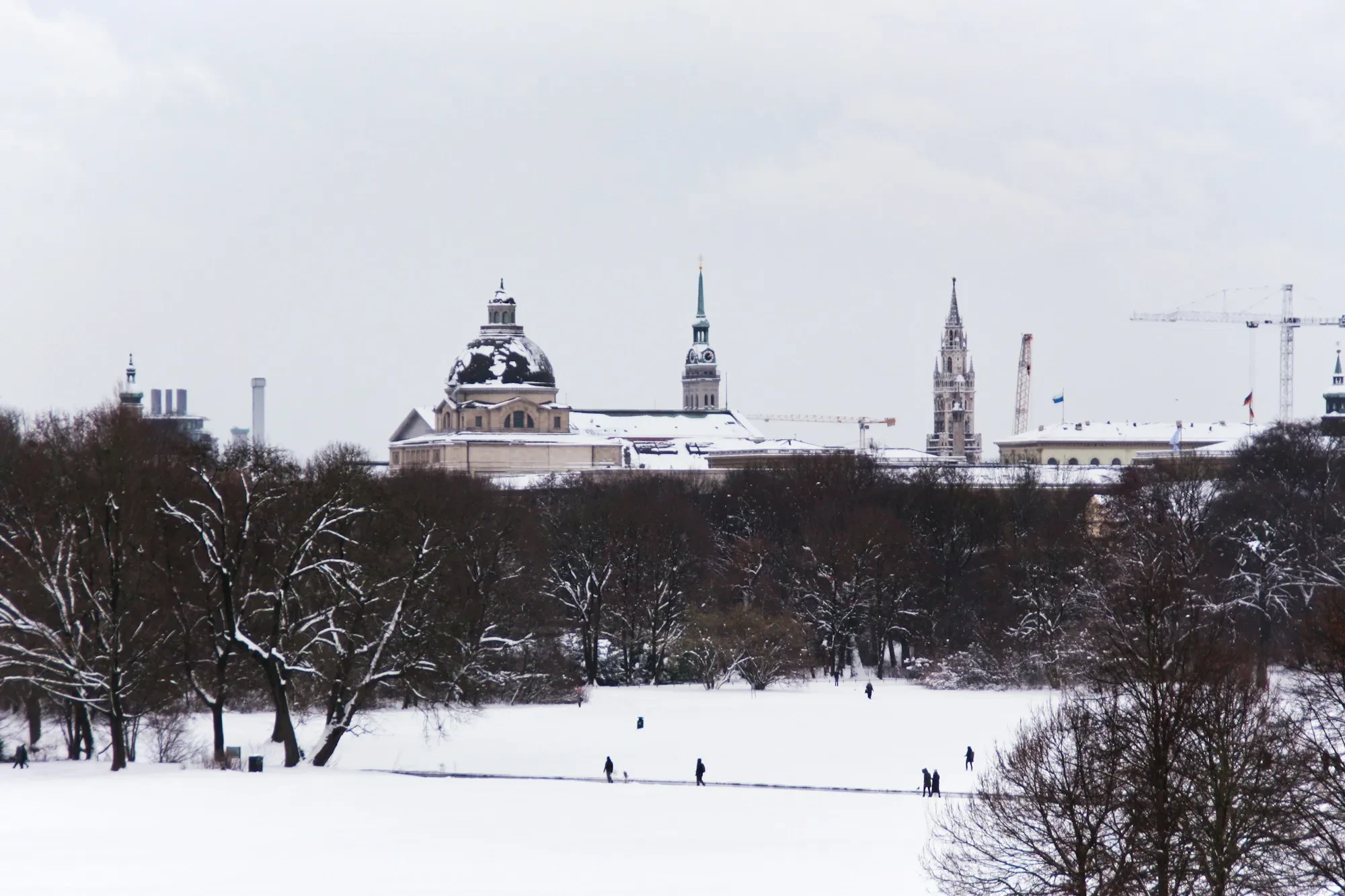
Munich sits at 520 meters above sea level at the foot of the Bavarian Alps, 550 km south of Berlin, and holds 1.5 million residents in a city footprint dominated by the 370-hectare Englischer Garten, the Deutsches Museum island in the Isar River, and a historic core anchored by Marienplatz since 1158. Three days covers the Residenz, Nymphenburg Palace, and the main museums; add two more for day trips to Neuschwanstein Castle and Salzburg.
🕐
Best Time
May-June, Sept-Oct
💶
Currency
Euro (EUR; 1 EUR is approximately $1.09 USD)
🗣️
Language
German; English widely spoken at hotels, museums, and all tourist-facing venues
🚇
Transport
U-Bahn, S-Bahn, Tram, Bus (MVV network)
🌡️
Climate
Continental; warm summers peaking at 26-28°C, cold winters with regular snowfall from December through February
Munich Airport (MUC) sits 28 km northeast of Marienplatz. S-Bahn lines S1 and S8 run from the terminal basement directly to Munich Hauptbahnhof every 10 minutes from approximately 4 AM to midnight; the journey takes 45 minutes and a single ticket costs $15 (EUR 13.60). The Lufthansa Express Bus covers the same route to Hauptbahnhof in 45 minutes for $14 single or $23 return and drops at the main station's north entrance. Taxis from the official stand inside the arrivals hall run $90-120 depending on traffic. Uber and Bolt both operate from the designated ride-hail pickup zone; a standard car runs $40-65. The trap: at the airport S-Bahn platform, the S1 line has two branches and not every train continues to Hauptbahnhof — read the destination displayed on the front of the train before boarding, or take the S8 which terminates at Hauptbahnhof without branching. Last mile: both S-Bahn lines arrive at the underground platforms below Hauptbahnhof; follow the signs for U-Bahn (U1 through U8) on the level above to connect to any city-center stop.
Munich's MVV network covers U-Bahn, S-Bahn, trams, and buses across the city with a single ticket system. A single ride in the inner zone (Zone M) costs $4.50 (EUR 4.20); the Zone M Tageskarte (day pass) costs $10.50 (EUR 9.70) and breaks even after 3 rides — most visitor days involve 4-6 transit hops, so the day pass wins. The MVV app handles digital tickets and real-time departure boards with offline timetable access. Physical tickets must be validated at the blue stamping machines on the platform before boarding; MVV inspectors travel in plain clothes across all lines and the fine for an unvalidated ticket is $65 (EUR 60) payable on the spot. Uber and Bolt both operate; a cross-city fare runs $15-30 in normal traffic and $35-50 at peak hours. FreeNow (the licensed taxi dispatch app) covers the metered Munich taxi fleet and keeps fares logged.
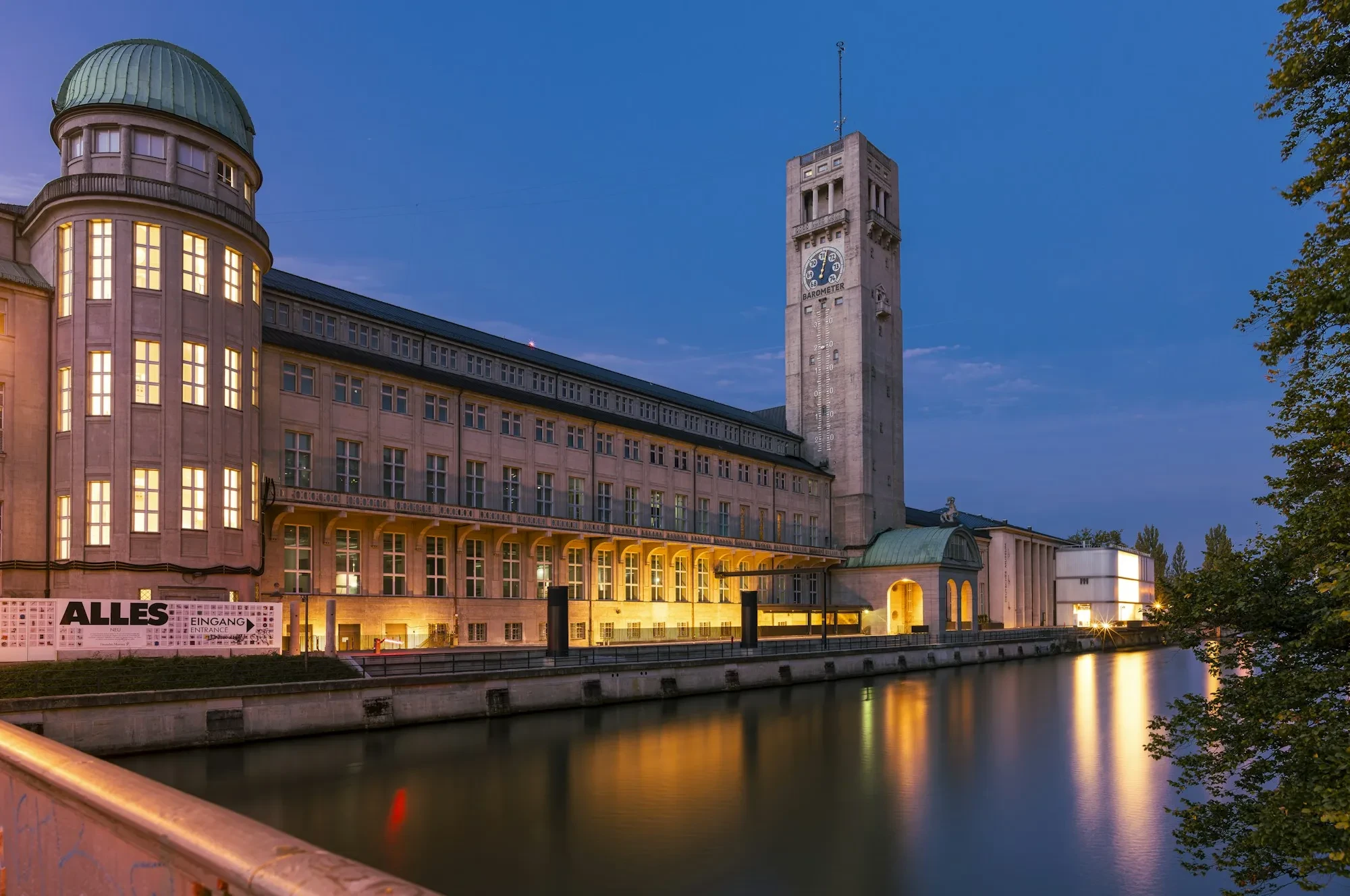
Munich holds the Deutsches Museum, the world's largest science and technology museum at 73,000 sqm across an island in the Isar River, with original aircraft, submarines, and a 1-kilometer walk through reconstructed mining tunnels. The Nymphenburg Palace complex stretches a 632-meter garden facade and 8 km of formal canal-lined grounds with 5 pavilions and was the summer seat of the Wittelsbach dynasty for over 300 years. The 370-hectare Englischer Garten runs 5 km north through the city center, larger than Central Park in New York, and holds the Monopteros Greek temple viewpoint, the Eisbach standing river wave where surfers ride year-round, and the Chinese Tower pagoda. Marienplatz, the main square, is anchored by the 1867 Neues Rathaus with its 98-meter tower and a Glockenspiel carillon of 43 bells and 32 figures running a 12-minute performance at 11 AM and noon daily. Munich also holds the Residenz, a 130-room palace complex that grew from a 14th-century moated castle to the largest city palace in Germany, with 10 courtyards and the world's largest collection of Meissen porcelain in a single building.
Must Visit
Marienplatz and the Glockenspiel
Marienplatz has served as Munich's central square for over 860 years; the Neues Rathaus completed in 1905 occupies the north side with a 100-meter neo-Gothic facade, and the Glockenspiel in the tower's bay runs a 12-minute performance at 11 AM and noon daily (5 PM added March through October) with 43 bells and 32 figures re-enacting 16th-century tournaments and the Dance of the Coopers, a plague-era survival ritual. Watching from the square is free; the tower lift to the Rathausturm observation platform is $7. Guerilla tip: the Altes Rathaus tower on the east side of the square has no queue and its 1st-floor passageway connects directly to Viktualienmarkt through the old building's corridor, bypassing the tourist peak at the square's center entirely.
-
Obatzda with Laugenbrezel
$6-8
Ripe Camembert mashed with butter, cream cheese, paprika, and raw onion into a spreadable paste, served in a ceramic dish beside a lye-baked pretzel twisted to a 30-cm diameter with a hard salt crust; the combination of tangy cheese and dense bread is the standard Bavarian cold plate sold at every Viktualienmarkt dairy stall.
Viktualienmarkt dairy counters at the center of the market, open weekdays 6 AM to 6 PM and Saturdays until 3 PM; look for the Standl signs above the refrigerated stalls
-
Käsespätzle
$12-16
Hand-pressed egg noodles cooked soft, layered with aged Emmental cheese, and finished with a fistful of browned onion rings; the dish arrives in the same cast-iron pan it was assembled in and the cheese at the base sets to a crust while the top stays molten.
Augustiner Stammhaus on Neuhauser Strasse in Altstadt, or any of the student restaurants along Amalienstrasse in Maxvorstadt between the university and the Pinakothek museums
-
Döner Kebab with chicken
$7-10
Spit-roasted chicken sliced thin and packed into fresh-baked flatbread with yogurt sauce, fresh tomato, onion, and white cabbage shredded to order; Munich's Turkish community, concentrated in Schwabing and around the university, runs some of Germany's most consistent stands and the quality of the baked flatbread separates the best from the rest.
Türkenstrasse corridor in Schwabing between Schellingstrasse and Amalienstrasse, or any of the 20-plus stands on Bahnhofplatz at the south exit of Hauptbahnhof
-
Langos
$5-8
Deep-fried yeasted flatbread stretched thin and puffed from the oil, topped with a ladle of sour cream and a grating of hard cheese; the Viktualienmarkt has carried the same Langos stall for decades and the bread is cooked to order, golden in 4 minutes and eaten standing at the counter.
Langos stand at the northeast corner of Viktualienmarkt near the flower stalls, identifiable by the frying counter and the queue that forms from late morning
Munich's crime rate sits among the lowest of any major European city; the primary risk is petty theft concentrated at Marienplatz, the Hauptbahnhof concourse, and the Englischer Garten in summer. Three active scam patterns: (1) Friendship bracelet sellers at Marienplatz approach and loop a cord around your wrist, then demand EUR 10-20 before releasing it — turn and walk away before any contact is made; (2) Individuals posing as MVV ticket inspectors present a printed fine notice and demand immediate cash — real Bayerische Oberlandbahn inspectors always show a photo ID card, never collect cash on the spot, and offer to issue a formal fine payable later; (3) Taxi drivers at unofficial kerbside spots quote a flat rate before the meter runs, typically EUR 50-70 for a 20-minute journey — use FreeNow to dispatch a licensed Munich taxi so the metered fare is logged. Altstadt, Maxvorstadt, Schwabing, and Haidhausen are calm at any hour. The block between Hauptbahnhof and Sonnenstrasse thins out by midnight. Solo female: the U-Bahn and S-Bahn run until 2 AM on weekends with no female-only cars; the Marienplatz U-Bahn concourse is lit and staffed late and serves as the standard late-night reference point. Hospital: LMU Klinikum Grosshadern, Marchioninistrasse 15 (U6 to Klinikum Grosshadern, exit marked Notaufnahme for the emergency room). US Consulate General Munich: Koniginstrase 5, 10 minutes on foot from the Universitat U-Bahn stop. Emergency number: 112.
Must Visit
Munich Residenz
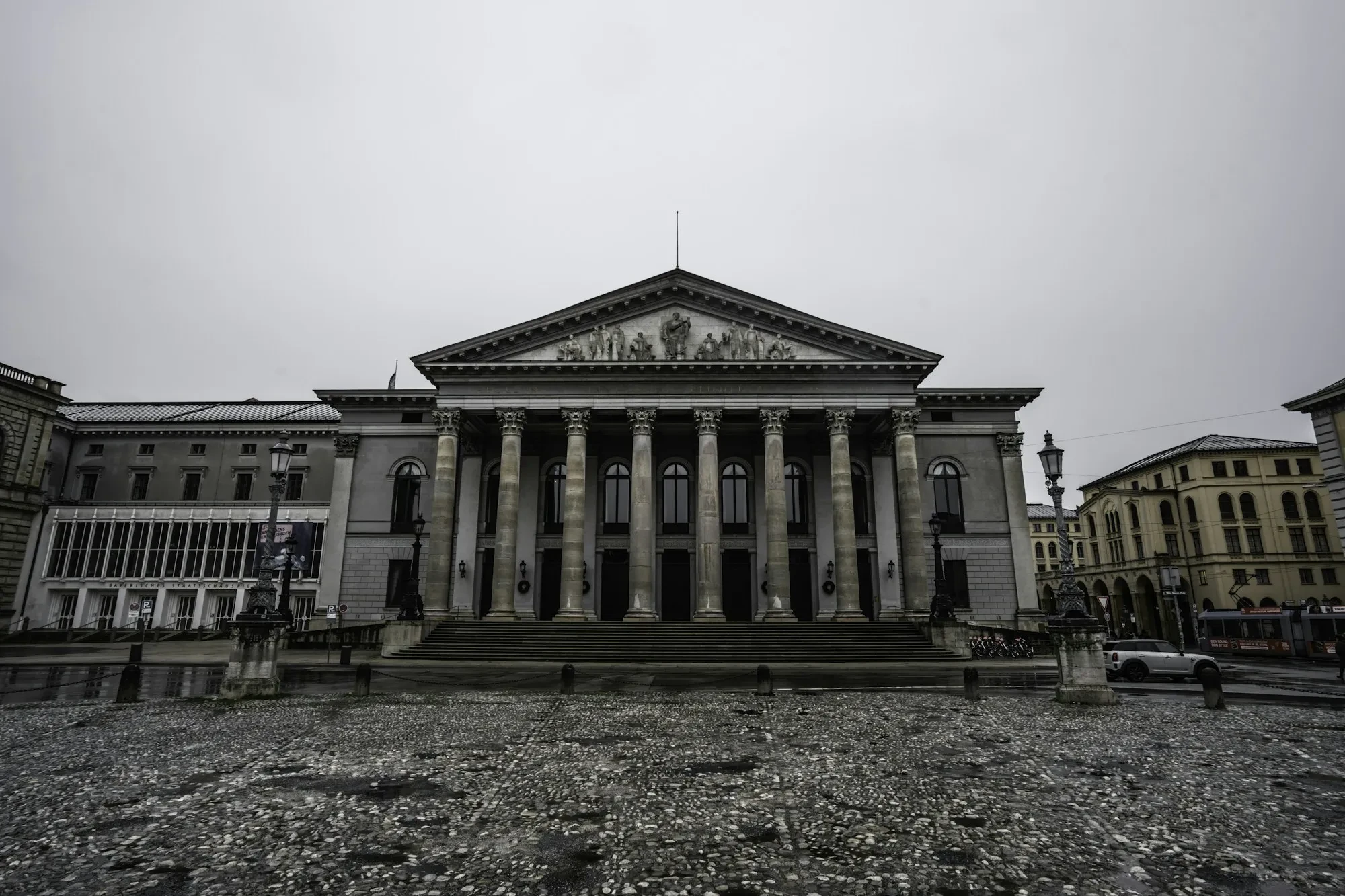
The Residenz grew from a 14th-century moated castle into the largest city palace in Germany, with 130 rooms, 10 courtyards, and the adjacent Cuvillies Theatre — an 18th-century rococo performance hall still used for opera and concert series. The Ancestral Gallery, room 89, holds 121 full-length Wittelsbach dynasty portraits in a single 67-meter mirrored corridor that receives a fraction of Versailles' traffic despite comparable scale. Combined entry to the museum and the Treasury (which holds the crown jewels and the 1586 St. George statuette in gold, enamel, and 2,291 gemstones) costs $16. Guerilla tip: enter through the Residenzstrasse door, not the main Hofgarten courtyard gate — it deposits you at the start of the museum sequence on the first floor and avoids the courtyard crowds from tour groups arriving by the palace's larger north entrance.
- eSIM: Airalo runs on the Telekom network at $8-15 for 5-10 GB over 30 days; Holafly is $19 for unlimited data over 7 days on the Vodafone network. Public Wi-Fi at Hauptbahnhof and all S-Bahn station platforms requires an EU-registered phone number for the SMS verification code — if you have no local SIM, the airport Wi-Fi portal is the last reliable free connection before the city center.
- Cash vs. cards: Munich is more cash-dependent than other Western European capitals. Aldi, Lidl, Rewe, and most Viktualienmarkt stallholders are cash-only or only accept German debit cards. ATMs labeled Geldautomat at Sparkasse and Deutsche Bank branches charge no foreign transaction fee; Hauptbahnhof exchange counters charge 5-7%. Carry EUR 30-50 at all times.
- Power: Type F sockets (standard Schuko two-pin used across continental Europe), 230V/50Hz; any standard European adapter fits. US appliances without dual-voltage labeling will fail without a converter.
- Advance bookings: Neuschwanstein Castle entry sells out 3-7 days ahead; book timed slots at ticket.hohenschwangau.de only — no third-party reseller. The Residenz Museum rarely queues and takes walk-ins. BMW Plant Munich tours require a reservation 6+ weeks ahead via bmwgroup.com/plant-munich; BMW Welt itself is free and walk-in.
- Visa: Schengen area. US, UK, Canadian, and Australian passport holders enter visa-free for up to 90 days in any 180. The ETIAS EU travel authorization is active from 2025, costing $8 per application and valid 3 years; verify current status at etias.com before travel. Passport must be valid at least 3 months beyond the planned departure date.
- The Alte Pinakothek, Neue Pinakothek, and Pinakothek der Moderne each charge EUR 1 (under $1.20) entry on Sundays versus the normal EUR 10-12 per gallery on weekdays; combined access to all three on a Sunday costs less than $3.25. Tour groups avoid Sundays assuming the galleries are packed — the reality is that Sunday mornings are calmer than a typical Thursday afternoon.
- Backpacker ($65-90/day): hostel dorm $25-35 in Maxvorstadt or near Hauptbahnhof, MVV Zone M day pass $10.50, two market meals $15-25 (Obatzda with pretzel at Viktualienmarkt $7, Döner at a Schwabing or Bahnhofplatz stand $8), free sights including Marienplatz Glockenspiel performance, the Englischer Garten, the Hofgarten, and the Monopteros viewpoint.
- Mid-range ($130-195/day): 3-star hotel in Maxvorstadt or Lehel $80-130, MVV day pass plus 1-2 Uber or FreeNow hops $15-25, three meals including one sit-down restaurant $40-60, two paid sights at $11-16 each such as the Deutsches Museum at $16 and the BMW Museum at $11.
- Comfort ($250-380/day): 4-star hotel near the Residenz or Odeonsplatz $160-250, FreeNow taxis throughout $30-50, sit-down lunches and dinners at Altstadt restaurants $80-120, premium experiences including the Residenz Museum combo at $16, Nymphenburg Palace at $16, and the Neuschwanstein day trip all-in at $55-65.
- The free sights in Munich fill an entire Day 1 itinerary without paying for anything: Marienplatz and the Glockenspiel performance, the Englischer Garten including the Eisbach wave and the Monopteros, the Hofgarten with the Diana Temple, and Odeonsplatz all cost $0. Most first-time visitors buy the $16 Residenz ticket on arrival and miss that the most-photographed spots in the city are entirely free.
Must Visit
Nymphenburg Palace
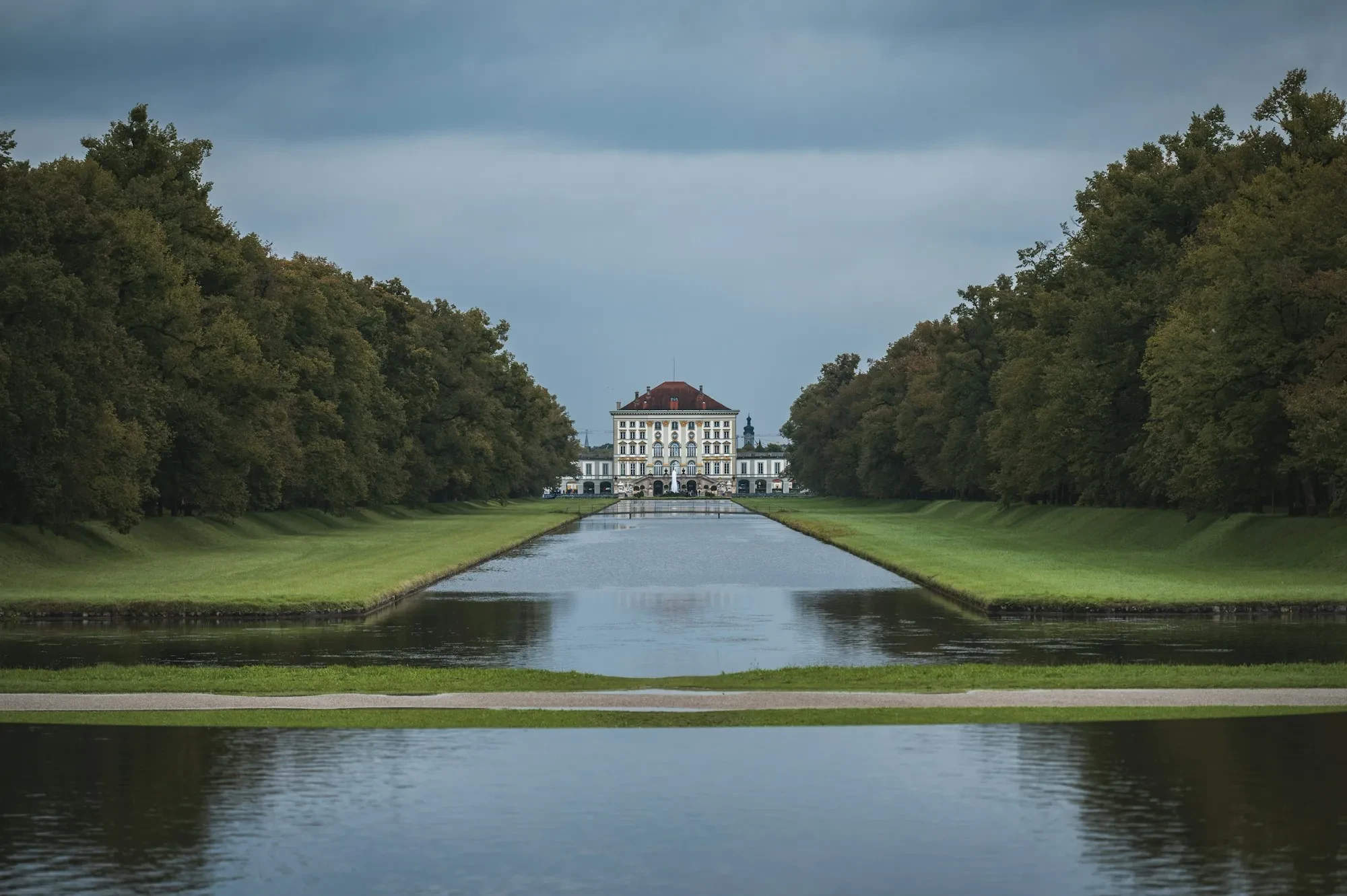
The Wittelsbach summer palace begun in 1664 stretches a 632-meter garden facade and anchors 8 km of formal park canals, pavilions, and wooded hunting grounds. The main palace interior holds the Gallery of Beauties, 36 portraits of women commissioned by King Ludwig I including a shoemaker's daughter and a local baker's wife displayed alongside the queen with equal scale, and the State Apartments furnished across 3 centuries. Combined entry to the palace, coaches museum, and the Amalienburg hunting lodge costs $16. Tram 17 or 51 from the city center to the Schloss Nymphenburg stop runs 20-25 minutes. Guerilla tip: the north canal behind the palace complex is only reachable on foot and sees almost no visitors; the 20-minute walk from the rear fountain to the Pagodenburg teahouse passes through a woodland canal section with no ticket required and no tour groups.
Altstadt-Lehel puts you within 10 minutes on foot of Marienplatz, the Residenz, and the Viktualienmarkt; 3-star hotels run $100-180 and the narrow lanes make taxis slower than walking, so it rewards guests who move on foot. Maxvorstadt, the university district adjoining the Pinakothek museums and 2 U-Bahn stops from BMW Welt, runs $70-130 mid-range and holds the best hostel stock in the city; Amalienstrasse and its side streets have the highest density of low-cost accommodation for the quality. Schwabing, the residential quarter north of the Englischer Garten, is 2 U-Bahn stops from the center on U3 or U6, hotel rates run $90-160, and the Turkenstrasse kebab and restaurant corridor is walkable from any Schwabing hotel. Haidhausen, east of the Isar River, is the calmest family base with 3-star options at $80-130 and a 10-minute tram ride to Marienplatz; Rosenheimerstrasse and Max-Weber-Platz hold the quieter accommodation options at lower rates than equivalent Altstadt properties.
- January-February: coldest months, snowfall likely, fewest visitors at all sights. Hotel rates drop 30-40% from summer peaks. The Deutsches Museum and Residenz are near empty on a January weekday morning; queue times at both are under 5 minutes.
- March-April: shoulder season, Eisbach surfers resume full sessions in March and the Englischer Garten meadows reopen; crowds build through April. Book 4-6 weeks ahead for May and June stays.
- May-June: the best window. Temperatures 18-24°C, Nymphenburg gardens reach peak condition, outdoor seating fills across Schwabing and Altstadt. Book 6-8 weeks ahead for anything central.
- July-August: peak summer, 24-30°C with occasional spikes above 33°C, the Englischer Garten meadows fill by 10 AM and the Isar banks attract waders and swimmers. Book 8-12 weeks ahead.
- Late September-early October: citywide hotel rates in the central districts surge 3-5x during the Oktoberfest festival period; any hotel within 15 minutes of Marienplatz will cost $300-600 per night at mid-range properties. Book 5-6 months ahead or plan to stay in Haidhausen or Schwabing where rates rise less sharply.
- November-December: Christkindlmarkt Christmas markets open on Marienplatz, Residenzplatz, and Sendlinger Tor from late November through December 24, with mulled-juice stands, gingerbread stalls, and a 30-meter tree at Marienplatz. Hotel rates stay at October levels, $90-130 mid-range, while the atmosphere is calmer and more local than summer. Best value window in the city calendar.
- Cheapest flights: Tuesday and Wednesday departures book 10-15% cheaper than Fridays and Sundays; January departures from North America and the UK are typically the lowest-cost of the year outside holiday windows.
- Starnberger See (Lake Starnberg): S6 from Hauptbahnhof to Starnberg, 30 minutes. Round-trip fare on an MVV outer-zone ticket is $22, or include it in a Bayern-Ticket at $31 which covers all regional trains and buses in Bavaria all day. The lakefront promenade is free to walk; public swimming from the Strandbad areas is free June through August. Verdict: half-day in summer; skip entirely November through March when the promenade is deserted. Most Munich visitors dismiss this as 'just a lake' and miss that the Alpine mountain backdrop visible from the Starnberg shore is the clearest view of the Bavarian Alps accessible from the city without a car.
- Dachau Memorial and Museum: S2 from Hauptbahnhof to Dachau station, 25 minutes, then bus 726 to the KZ-Gedenkstatte stop, 20 minutes; round-trip all-in $20, or covered by the Bayern-Ticket at $31. Entry to the memorial and museum is free; audio guide $4 from the kiosk or free via the official Dachau app. Verdict: allow 3-4 hours on site to cover the museum building, the reconstructed barracks, and the memorial chapels properly; the official app provides route guidance through all sections in English.
- Salzburg, Austria: direct Railjet from Hauptbahnhof to Salzburg Central, 1 hr 30 min fastest. Return ticket from $18 booked 7+ days ahead via db.de or oebb.at; same-day rates reach $40-55. Verdict: full day works comfortably, the Hohensalzburg Fortress ($17 including the funicular) and the UNESCO Altstadt fill 6 hours without rushing. Skip the guided Mozart tour packages sold near Hauptbahnhof for $65-85 per person; the self-guided old-town walk plus the fortress entry covers identical ground for under $20 total.
The current reality in Munich is that the Eisbach wave in the Englischer Garten, where surfers ride a standing river wave beneath Prinzregentenstrasse, packs the bankside with spectators from May through September — but the pedestrian bridge 20 meters directly above the wave gives an unobstructed overhead view of the riders with no elbow-to-elbow crowd and clear sightlines across both banks. Walk north from the Haus der Kunst museum on Prinzregentenstrasse for 4 minutes to find the bridge access stairs on the west side of the road. The current reality in Munich is that the Residenzmuseum's Ancestral Gallery, a 67-meter mirrored hall with 121 full-length portraits of the Wittelsbach dynasty, receives a fraction of the visitors that the Residenz's more advertised Treasury wing does, yet it runs the entire length of the north wing and takes 25 minutes to walk at reading pace — most guided tours skip it in favor of the Treasury, so arriving 9 AM on a weekday morning gives you the hall to yourself for the first 45 minutes. The current reality in Munich is that the Stachus underpass at Karlsplatz, 4 minutes west of Marienplatz along the pedestrian Kaufingerstrasse, holds the largest covered bicycle parking in Germany at 1,300 spaces and is used entirely by commuters — but the same Karlsplatz square has a free public fountain pool in summer where local families wade and eat lunch on the steps with no queue, no ticket, and no cruise groups, making it the least-visited free attraction in the city center.
Must Visit
Englischer Garten
The Englischer Garten covers 370 hectares of meadow, canal, and woodland running 5 km north from the edge of Maxvorstadt, making it the largest landscaped park within a European city and larger than Central Park. The Monopteros, a circular Greek-style temple on an artificial hill at the south end, is a 12-minute walk north from the Bavarian State Chancellery and gives the only elevated city panorama accessible on foot without paying for a tower or museum. The Chinesischer Turm (Chinese Tower) in the park center stands 25 meters and has a brass band playing from the upper platform on most Saturday and Sunday mornings. Guerilla tip: the meadow on the east bank of the Auer Muhlbach canal, a 10-minute walk northeast of the Monopteros, stays empty even on peak summer weekends because it is not on any printed map of the park; local families use it as the main picnic area while the Glockenspiel meadow south of the tower fills up.
Must Visit
Deutsches Museum
Founded in 1903 and rebuilt on Museumsinsel, an island in the Isar, the Deutsches Museum covers 73,000 sqm across 6 floors and 80 departments, from an original Dornier Do X flying boat and a 1944 V2 rocket to the 1850 Brandtaucher submarine — the world's first practical submarine — which you can enter through the conning hatch. Admission is $16; a combined ticket with the Flugwerft Schleissheim aircraft hangar north of the city is $25. Guerilla tip: the mining gallery in the basement is a 1-kilometer walk through reconstructed tunnels and shafts from medieval coal and salt mines to 20th-century mechanized pits; most visitors never find the basement entrance off the main atrium, and the gallery is never crowded even on a Saturday when the aviation hall above has 30-minute waits.
Must Visit
BMW Welt and BMW Museum
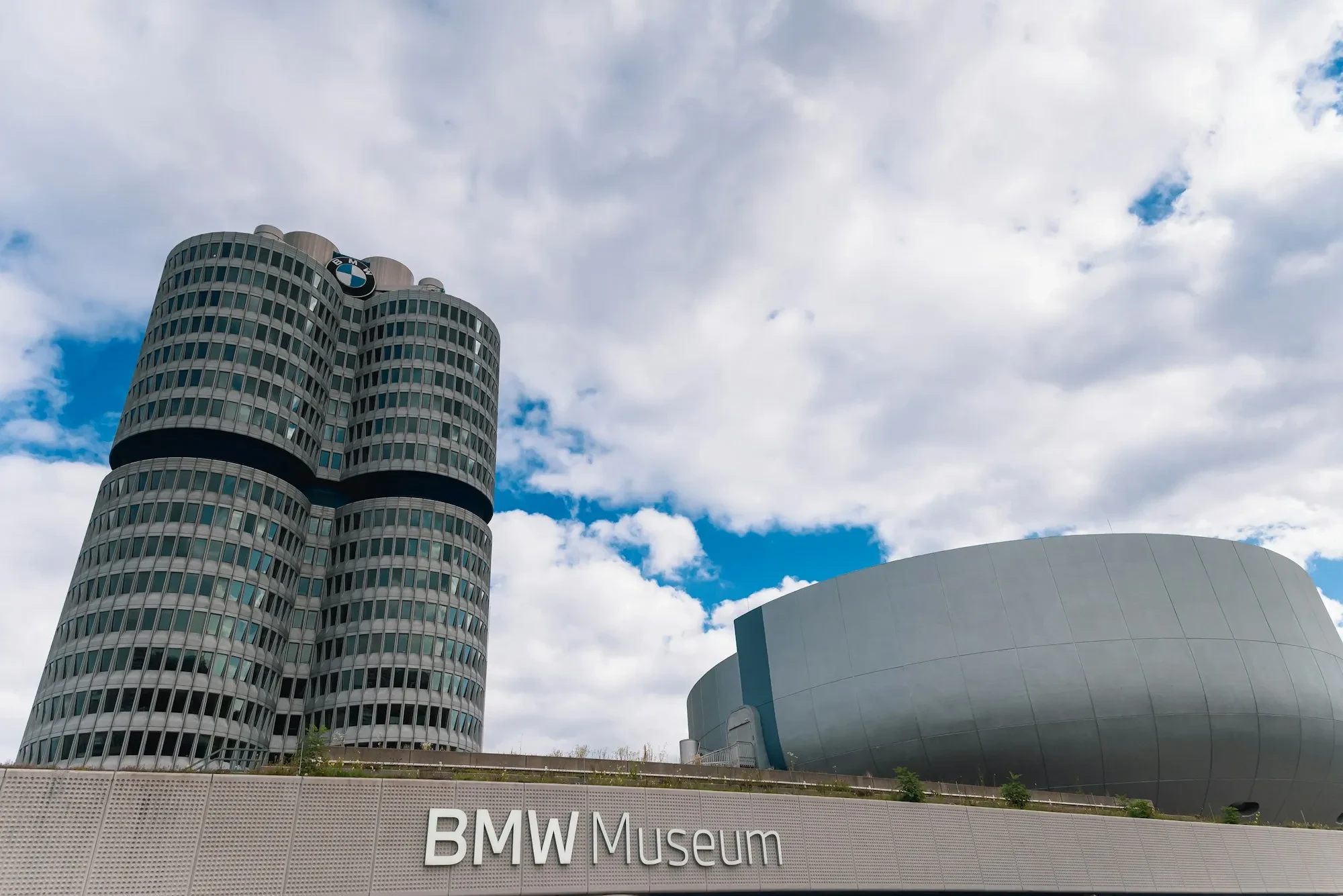
BMW Welt, the double-cone steel-and-glass delivery and exhibition center completed in 2007 at the north end of the Olympic Park, is free to enter and holds concept vehicles, motorcycles, and the working vehicle delivery facility where buyers collect new BMWs from a purpose-built handover suite; 850,000 visitors per year make it the most-visited private building in Bavaria. The adjacent BMW Museum ($11) is a bowl-shaped 1973 building covering 100 years of production history with 120 vehicles arranged by era. Both are reached by U3 to Olympiazentrum. Guerilla tip: BMW Welt's upper-level walkway above the delivery hall is accessible from the main entrance at no cost and gives a direct overhead view down into the delivery floor and the concept car display; most visitors stay at ground level and miss the overhead perspective entirely.
- Tipping: round taxi fares up to the nearest euro. Leave 5-10% at sit-down restaurants; nothing expected at Viktualienmarkt stalls, kebab counters, or bakeries. Rounding up the bill is the norm rather than calculating a percentage.
- Tap water: safe to drink from every tap in Munich. The city draws from Alpine spring sources via 10 closed-pipe reservoirs, giving water that meets the highest EU drinking standards. A 1.5-liter bottle at Edeka or Rewe costs $0.40 if you prefer bottled.
- Dress code at religious sites: covered shoulders and knees required inside the Frauenkirche (Munich Cathedral), Theatinerkirche, Michaelskirche, and the Residenz palace chapel; guards enforce the rule and will not admit visitors in tank tops, shorts above the knee, or sleeveless dresses. Smart-casual acceptable everywhere else; shorts are fine on the street and in all restaurants and markets.
- Public toilets: EUR 1 (~$1.10) coin-op at Hauptbahnhof. Free on all U-Bahn and S-Bahn station platforms (not inside the Hauptbahnhof building itself). The Galeria department store on Kaufingerstrasse has free toilets on the 3rd floor accessible without a purchase; look for the Toiletten sign by the escalator.
- Fine for unvalidated MVV ticket: $65 (EUR 60), collected by plain-clothes inspectors across all U-Bahn, S-Bahn, tram, and bus lines. Stamp physical tickets at the blue Entwerter machines on the platform; digital tickets bought through the MVV app are validated automatically.
- English at museums: all institutions in Munich's Maxvorstadt museum quarter carry English-language audio guides and bilingual signage at the major exhibits. Viktualienmarkt stall vendors typically speak no English; point at items and pay with coins or small notes.
- Skip the MVV airport-zone day ticket priced at $17.50 (EUR 16.10) if you are arriving on a day when you plan to stay in the city and not return to the airport: the standard Zone M day pass at $10.50 covers the entire city center network and saves $7. The airport-zone ticket is only worth buying if you need at least 2 separate trips between the airport and the city on the same calendar day.