Dubai is a coastal city-state on the southeast shore of the Persian Gulf, built along a 35-km strip of reclaimed and natural coastline at the head of the Dubai Creek, a 14-km saltwater inlet that originally split the trading port into Deira on the north bank and Bur Dubai on the south. The emirate covers 4,114 square kilometers, holds 3.7 million residents, and absorbs 17.2 million international visitors a year, the highest visitor count of any city in the Middle East. Three days covers Downtown, Old Dubai, and the Marina; add 2 more for Abu Dhabi and the desert.
🕐
Best Time
November-March
💴
Currency
UAE Dirham (AED)
🗣️
Language
Arabic; English is the working language and appears on every metro, road, mall, and menu sign
🚇
Transport
Dubai Metro, Tram, RTA Bus, Abra, Taxi
🌡️
Climate
Desert; mild 18-28°C winters, extreme 40-48°C summers May-September
Dubai International (DXB) handles 90 million passengers a year and sits 5 km east of Downtown. Terminals 1 and 3 connect directly to the Red Line metro: follow the silver footbridge signs at Arrivals to the airport metro station and tap in with a Silver Nol Card ($7 issue plus starting credit at the ticket office). A single ride to Burj Khalifa/Dubai Mall station is $1.65 and runs 30-35 min; trains depart every 7-10 min from 5am to midnight, every day except Friday when service starts at 10am. Terminal 2 (handles flydubai) is not on the metro line; take the free shuttle from T2 to T3 metro entrance (15 min, every 20 min). An RTA cream-colored taxi from the official airport queue at Arrivals costs $14-19 to Downtown including the $7 airport surcharge and runs 25-35 min in normal traffic. Careem and Uber both operate; pickup from the designated rideshare bay (follow signs after Arrivals, not the kerb) runs $16-25 to Downtown. The trap: men in business clothes shouting "Taxi, cheap fare" inside the Arrivals concourse drive unmarked sedans and charge $40-80 flat. They refuse the meter and will not produce a printed receipt. Walk past them to the marked RTA Taxi queue at Gate 2 or 3. Al Maktoum (DWC) handles a small share of long-haul carriers and has no direct metro; the F55 bus from DWC to Ibn Battuta metro station costs $2.20 and runs 30-40 min.
The Dubai Metro runs two lines: the Red Line traces Sheikh Zayed Road north-south for 52 km from Centrepoint (near the airport) to Expo 2020 station, hitting Burj Khalifa/Dubai Mall, Financial Centre, and Mall of the Emirates along the way; the Green Line loops through Old Dubai including Al Fahidi, Union, and Gold Souk stations. Silver Nol Card single rides cost $0.80-$2.10 by zones, the 1-day pass is $5.50 (pays off after 4 rides), and a daily fare cap of $3.80 kicks in once you tap that much in one day. Buy the Silver Nol at any ticket machine or station kiosk; the $0.55 Red Nol for one-time tourists exists but costs more per ride and is not worth the saving on a multi-day trip. Tap the card at the entry gate and again at the exit; inspectors fine $55 for invalid taps. Contactless Visa or Mastercard now works directly at most station gates, bypassing the Nol queue entirely. The official RTA Smart Apps app handles route planning, fare calculation, and station maps offline; Google Maps shows live train times in English. The Dubai Tram covers the Marina and JBR loop ($1.65 single, separate validation from metro). Careem (Dubai-born ride-hail) and Uber both operate; a 10-km cross-city ride from Downtown to Dubai Marina runs $7-14 in normal traffic and $15-25 in the 8-10am or 5-8pm rush. Cream RTA street taxis flag at $3.30 day rate, $4 night rate ($0.70/km after); meters are mandatory and audited. Refuse any driver who quotes a flat fare without starting the meter.
Must Visit
Burj Khalifa
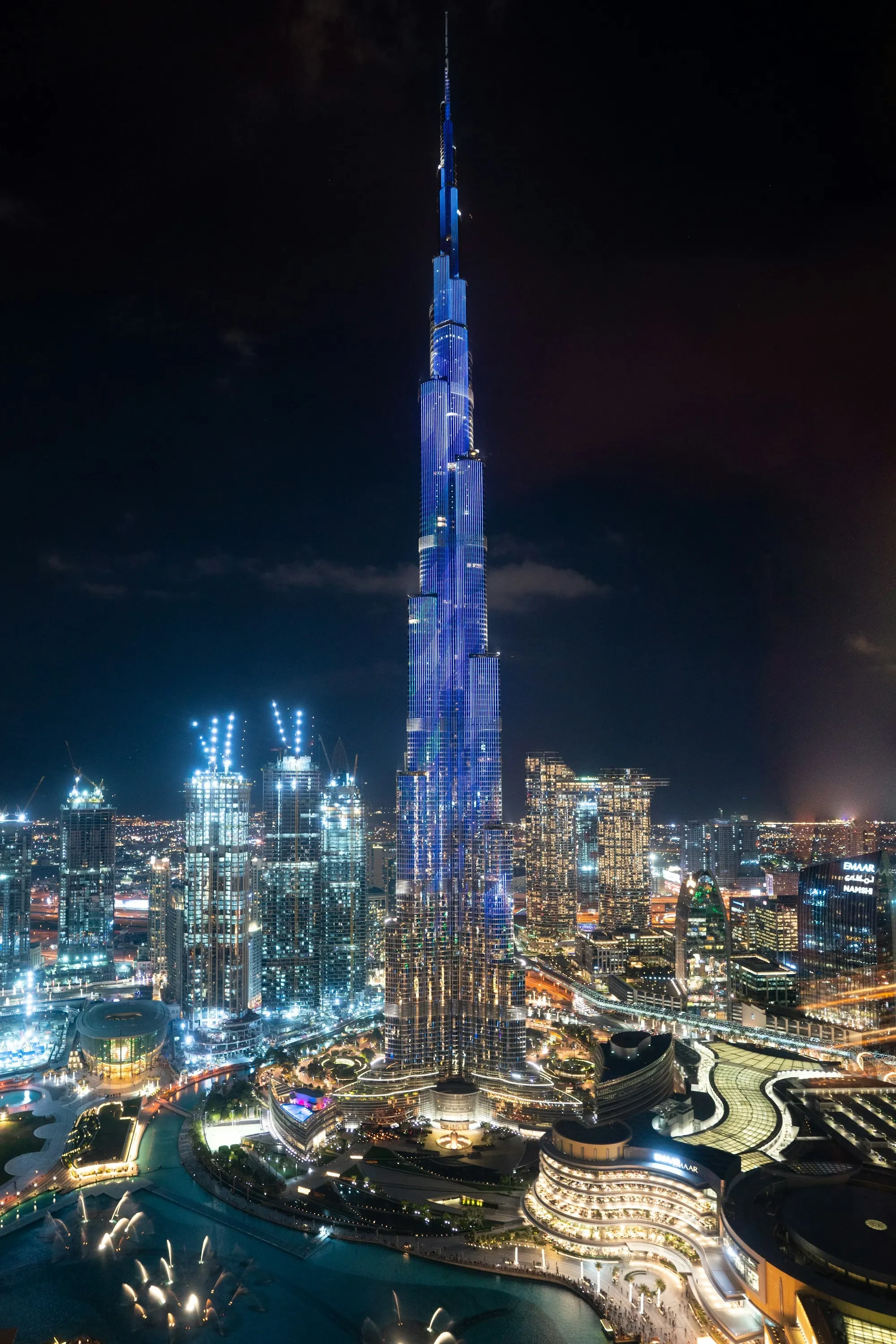
The 828-meter tower opened in 2010 as the tallest structure on earth and still holds that title 16 years later. The Y-shaped concrete-core footprint draws on the geometry of the Hymenocallis flower and houses 163 occupied floors above ground. The At The Top observation deck on levels 124 and 125 costs $48 in non-prime slots and $64 at sunset; the level 148 SKY deck runs $124. Guerilla tip: skip the paid decks entirely on a tight budget. The free Dubai Fountain show at the base of the tower runs every 30 min from 6pm to 11pm and gives you the full Burj Khalifa elevation from across the lake at no cost. If you do buy the ticket, book the 30-min slot starting one hour before sunset on the official atthetop.ae site (timed entry sells out 5-7 days ahead Nov-Feb) and skip the sunset slot itself, which has the longest queue and a 90-min wait at the elevator.
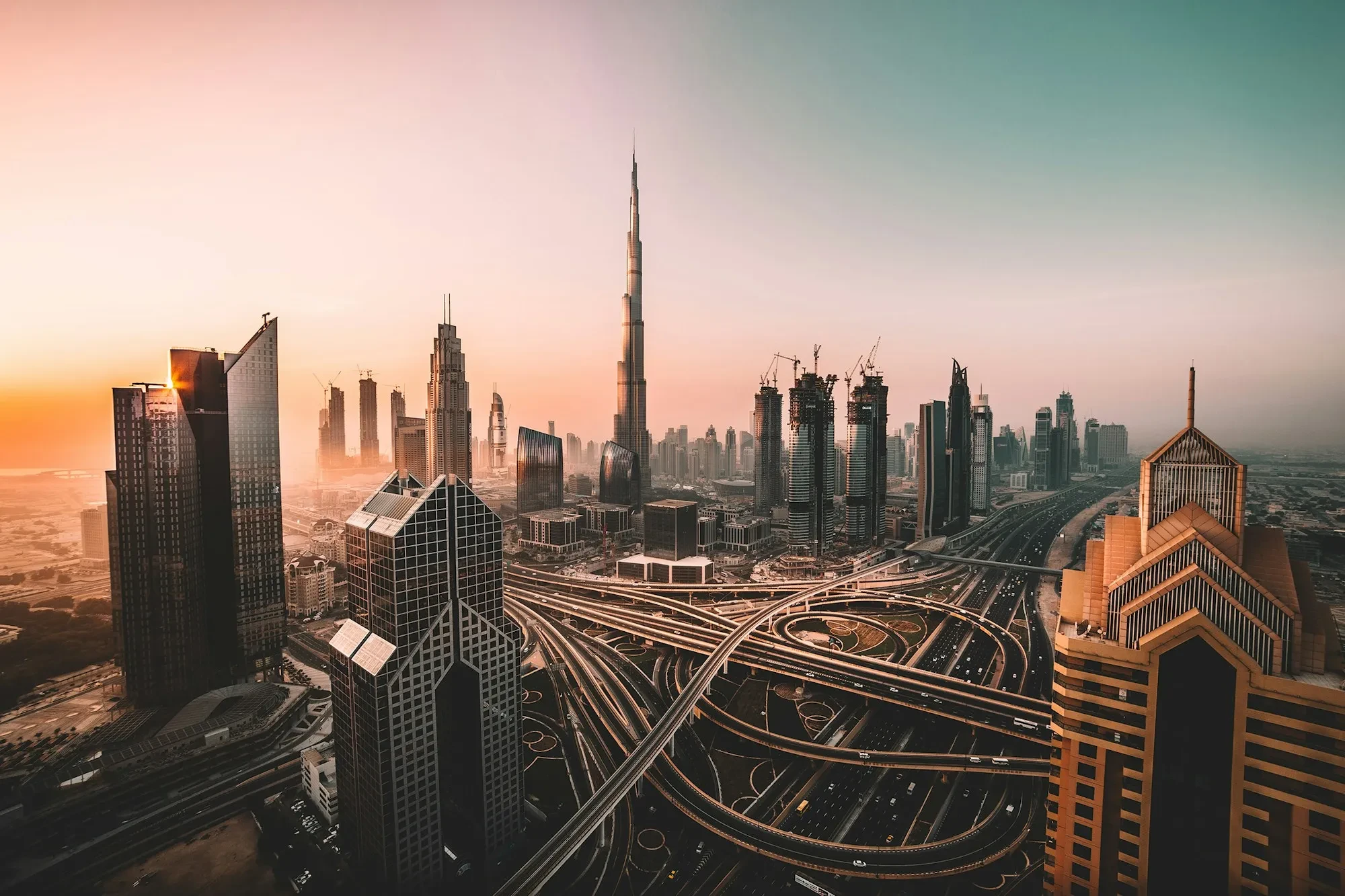
The Dubai skyline runs in two distinct clusters. Downtown anchors on the 828-meter Burj Khalifa, with the 414-meter Address Boulevard and the 309-meter Burj Plaza forming the inner ring around the 30-hectare Burj Khalifa Lake. Six kilometers west, the Marina cluster holds the 425-meter Princess Tower, the 414-meter 23 Marina, and the 392-meter Elite Residence, all built on a 3-km artificial canal cut into the desert in 2003. The original city sits 5 km north on the Dubai Creek, where the 19th-century coral-and-gypsum windtower houses of the Al Fahidi neighborhood (built 1890-1930) still stand on their original foundations, and the abra (wooden water taxi) crossing from Bur Dubai station to Deira Old Souk station costs $0.30 and runs every 90 seconds from 5am to midnight. Two hundred new high-rises have gone up across the emirate since 2010 and another 80 are under construction; the metropolitan resident population is rising by 70,000 a year and the visitor count by 1.2 million.
Must Visit
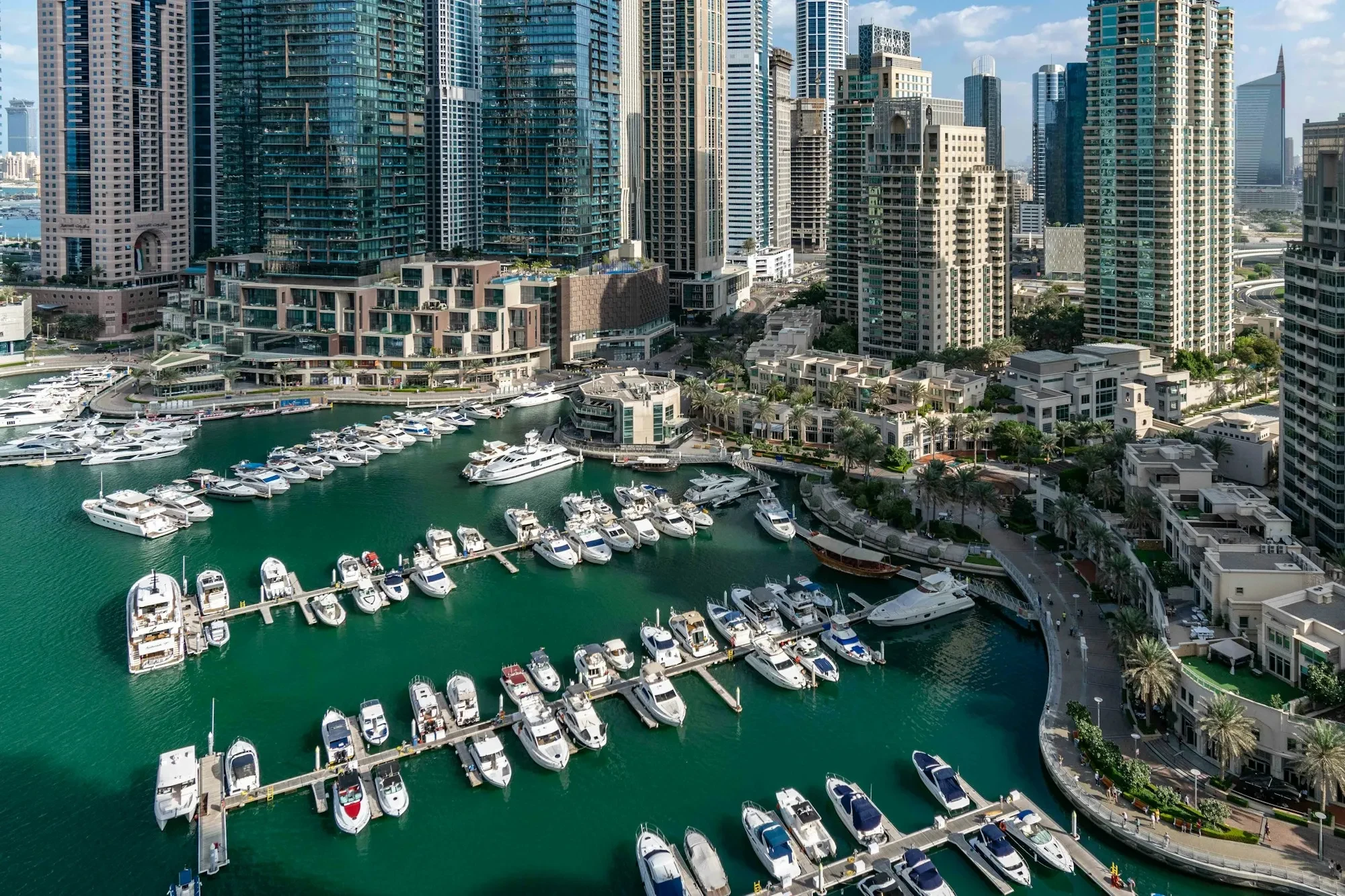
Dubai Marina
A 3-km artificial saltwater canal cut into the desert in 2003, ringed by 200 residential and hotel towers on a 50-hectare footprint. The Marina Walk promenade runs the full canal loop and is free to access 24 hours; the western end opens onto JBR Beach (Jumeirah Beach Residence), a 1.7-km public-beach strip with showers, shaded loungers, and an 8-meter-wide beachfront pavement. Guerilla tip: ride the Dubai Tram from Jumeirah Lakes Towers station to Marina Walk for $1.65 and walk the canal loop counterclockwise; the south side gets evening shade by 5pm in winter and frames the towers against the setting sun. The free shuttle ferry between Marina Walk and Bluewaters Island (home to the 250-meter Ain Dubai observation wheel) runs every 30 min from 10am to 11pm at no charge.
-
Shawarma
$2-3.50
Vertically stacked chicken or lamb spiced with cardamom, allspice, garlic, and lemon, roasted on a turning rotisserie and shaved into a thin Arabic flatbread with garlic toum, pickled turnip, and a sliver of tomato. Eat it standing up at the counter; no plates.
Al Mallah on Al Dhiyafah Road (Satwa), open since 1979; or Al Ijaza Cafeteria on Jumeirah Beach Road, both 24 hours
-
Manakish Zaatar
$1.50-2.50
Flat Lebanese dough baked to order in a stone oven and brushed with a paste of dried thyme, sumac, sesame, and olive oil. The crisp-edged bread folds in half around fresh mint, tomato, and cucumber.
Operation Falafel branches inside City Walk and at Box Park (open 7am for breakfast); or any Lebanese bakery along 2nd of December Street in Satwa
-
Machboos
$5-8
Emirati spiced rice cooked in chicken or lamb stock with dried lime (loomi), cinnamon, cardamom, and cloves, then layered over the meat and finished with crispy fried onions. Ask for chicken machboos to avoid the longer lamb cook time.
Al Fanar Restaurant in Festival City Mall or Dubai Mall (Emirati specialty house); Aseelah inside Radisson Blu Deira Creek for a riverside version
-
Karak Chai
$0.30-0.55
Strong black tea boiled with whole milk, cardamom pods, and condensed milk, poured from a steel kettle into a small glass tumbler. The default is sweet; ask for "karak hafif" (light) if you want less sugar.
Filli Cafe drive-throughs across the city (originally Al Khaleej Road); or any roadside kiosk in Satwa and Al Karama
-
Luqaimat
$3-5 per portion of 8
Walnut-sized fritters of yeasted flour and saffron, deep-fried in a copper wok until the crust turns dark amber, then drenched in date syrup (dibs) and dusted with sesame seeds. Eat them within 2 min of frying or the crust softens.
Logma in Boxpark on Al Wasl Road (Khaleeji concept cafe); or any Ramadan night-market stall outside the Sheikh Mohammed Centre for Cultural Understanding
- Visa: 30-day visa-free entry on arrival for US, UK, EU, Canadian, Australian, and 50+ other passports. Passport must be valid for at least 6 months past entry date. Indian and Pakistani passport holders need a pre-arrival e-visa ($90, 24-48 hr processing through Smart Services UAE).
- eSIM: Airalo, Holafly, and Saily all sell UAE plans from $8 for 5 GB / 30 days; Etisalat and du physical SIMs at the airport kiosks cost $30-50 for similar plans. Buy the eSIM before boarding the plane and activate it in baggage claim, not after.
- Power: Type G (UK 3-pin square) is the universal Dubai socket. 220V/50Hz. US devices not rated 100-240V need a step-down converter; a Type G adapter alone is not enough.
- Cash: ATMs at Emirates NBD, Mashreq, and ADCB charge $5-6 foreign-card fee per withdrawal. Withdraw the $1,000 daily maximum in one go to dilute the fee. Choose AED at the dynamic currency conversion prompt; selecting your home currency adds 3-5%. Card is accepted everywhere including supermarkets, taxis, and food courts; keep $30-50 cash on hand for abra rides, souk haggling, and roadside karak stalls.
- Advance bookings: Burj Khalifa At The Top sells out 5-7 days ahead Nov-Feb (book at atthetop.ae); Museum of the Future ($42) sells out 4-7 days ahead every month of the year (book at museumofthefuture.ae); desert safaris booked online from a registered operator run $35-50 versus the kiosk price of $55-95 for the identical evening tour.
- Counterintuitive tip: book the metro Silver Nol Card at any T1 or T3 metro station counter, not at the standalone airport kiosk. The Smart Service kiosk near baggage claim sells the AED 25 (~$7) card for the same price but the line is twice as long and the staff cannot reload card balances past $14.
Must Visit
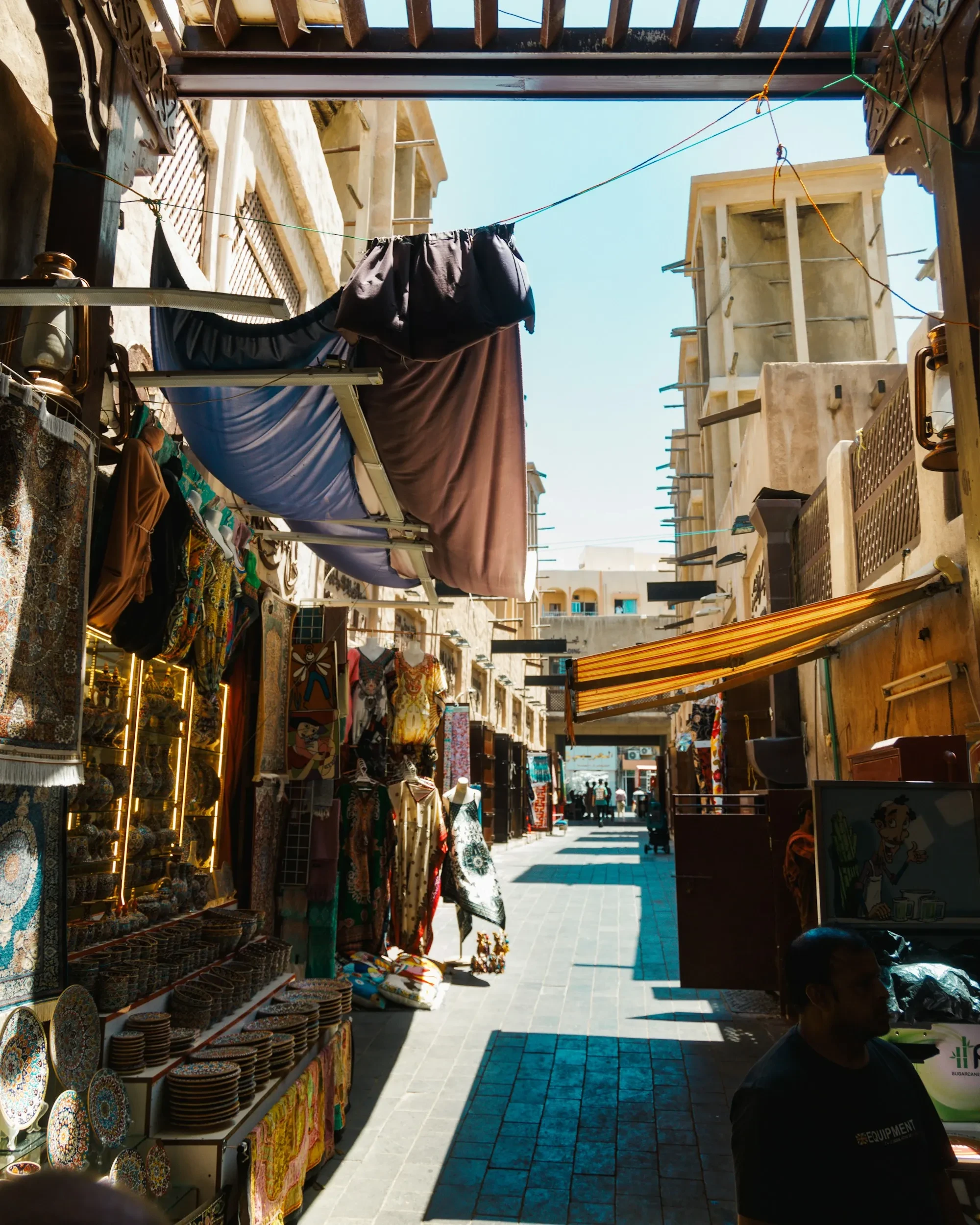
Al Fahidi & the Dubai Creek Souks
Bur Dubai's original quarter, settled in the 1890s by Persian traders who built coral-stone and gypsum courtyard houses with windtower (barjeel) ventilation that drops indoor temperatures by 8-10°C without any electricity. The 60-house neighborhood is now the Sheikh Mohammed Centre for Cultural Understanding ($5.50 entry for the daily 10am cultural breakfast; $14 for the heritage walking tour). Cross the Creek north on the abra ($0.30, 5-min crossing, cash only) to land at the Spice Souk and Gold Souk on the Deira bank. Guerilla tip: enter the Gold Souk from the Sikkat Al Khail Street side, not the main covered arcade. The narrow side lanes hold the 22-carat retailers who set their margin at $4-6 per gram over spot price; the covered-arcade frontage retailers run $10-16 over spot. Bargain to 60% of the opening quote; the second offer is where the real price sits.
Dubai records one of the lowest tourist-victimization rates of any major travel hub: CCTV blankets every public space, the Dubai Police app translates incident reports into 8 languages, and the Tourism Dispute Settlement Centre resolves visitor complaints in 72 hours. The whole city is walkable at any hour in Downtown, Marina, JBR, Al Fahidi, City Walk, and Jumeirah Beach Road. Three active scam patterns: (1) Inside the airport Arrivals concourse, men in business clothes wave a tablet and offer "limousine to your hotel" for $40-80 flat. They are unlicensed sedans, refuse the meter, and produce no receipt. The legal alternative is the RTA Taxi queue at Gate 2 or 3 (cream-colored cars, $14-19 to Downtown). (2) In the Gold Souk, vendors quote a per-gram rate then add a "making charge" of 20-50% at the till. Insist on a written quote in dirhams that lists weight, carat, and final total before handing over the card or cash; if the vendor refuses, walk to the next shop. The Dubai Municipality stamps every gold piece with a 22-carat or 18-carat hallmark inside the band, visible with the shop's loupe; check the stamp before paying. (3) Unlicensed currency changers approach near the Deira Spice Souk and Naif Souk offering 5-8% above bank rates. The exchange is real but the larger bills they hand back are counterfeit or short-counted. Use only Al Ansari Exchange, Lulu Exchange, or UAE Exchange branches; both are open Sat-Thu 9am-9pm. Solo female travel: metro trains have a women-and-children-only car at the front of every train, marked with pink stickers on the platform; the AED 100 ($27) fine for men entering is enforced. Tourist Police hotline 901 (24/7, English). Rashid Hospital ER: Oud Metha Road, nearest Metro Oud Metha (Green Line); American Hospital ER: 19th Street, Oud Metha, nearest Metro Oud Metha (5-min walk). US Consulate: Corniche Deira; nearest Metro Union (10-min walk).
Must Visit
Palm Jumeirah & Atlantis
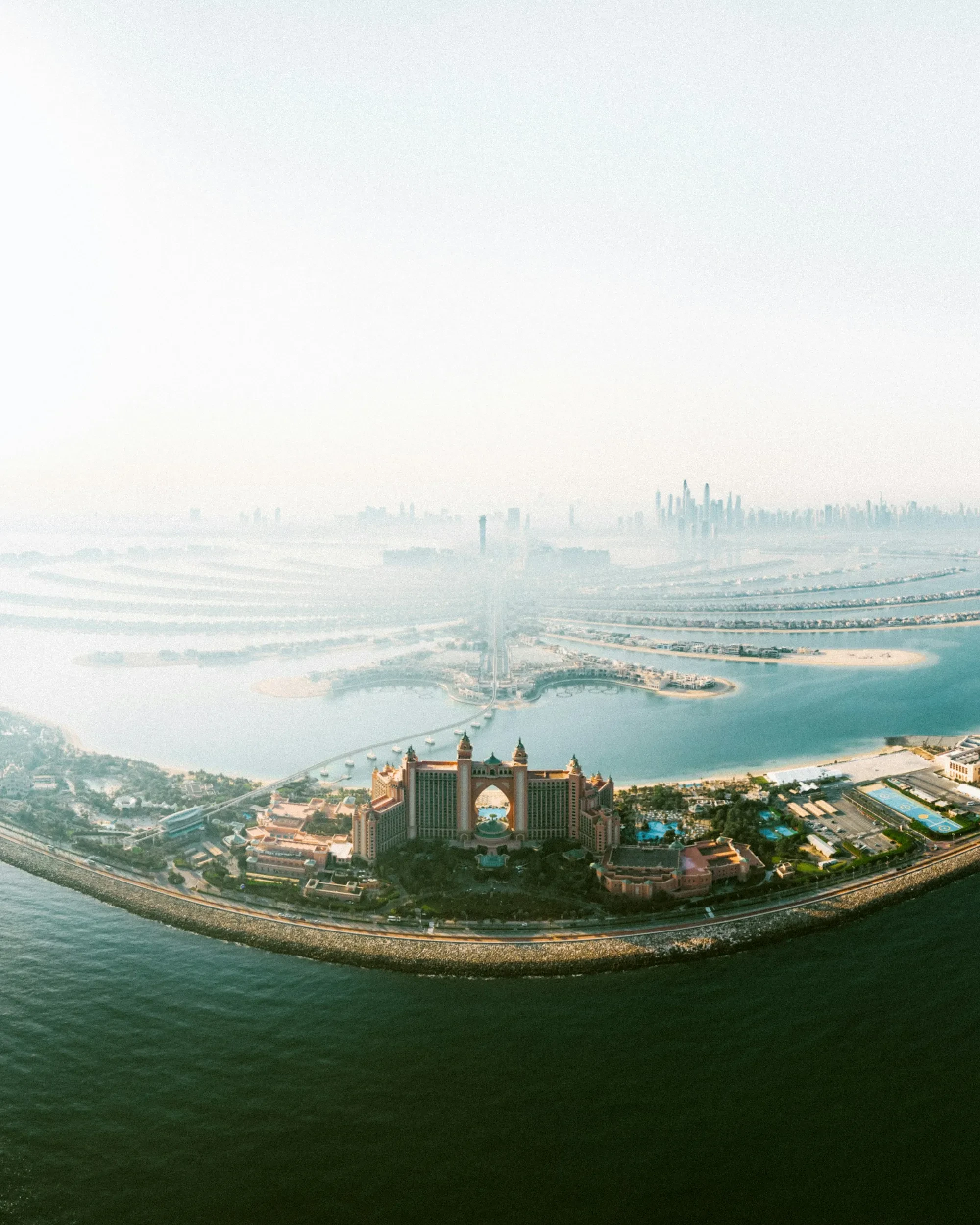
A 5-km artificial archipelago in the shape of a 17-frond palm tree, reclaimed from 110 million cubic meters of sand and 7 million tons of rock between 2001 and 2006. The trunk runs straight out from the mainland for 2 km; the 11-km outer crescent encloses the entire island and breaks the open-sea swell. The Palm Monorail runs the trunk from Gateway station (Nakheel Mall) to Atlantis Aquaventure station for $5.50 one-way, every 10 min from 9am to 10pm. Guerilla tip: skip the $96 Atlantis Aquaventure waterpark on a half-day budget and walk the free Palm Boardwalk on the east crescent instead, a 4-km uninterrupted public seafront with the Burj Al Arab framed against the open Gulf at the western turning point. The View at The Palm observation deck on the 52nd floor of The Palm Tower costs $25 ($14 booked online) and gives the only top-down photograph of the full palm-frond layout. Take metro Red Line to Internet City then RTA bus 8 to Palm Gateway (45 min total, $2.50).
Downtown around the Burj Khalifa puts you within walking distance of Dubai Mall, the Fountain, Souk Al Bahar, and a Red Line metro stop (Burj Khalifa/Dubai Mall station). Hotel rates run 30-50% above the city median; the Address Downtown and Vida Downtown anchor the high end. Dubai Marina and JBR (Jumeirah Beach Residence) gives you a 1.7-km public beach, dense restaurant frontage, the Tram loop, and the Red Line at Damac Properties or Jumeirah Lakes Towers stations; rooms run 20-30% under Downtown for equivalent star ratings. Business Bay sits one Red Line stop south of Downtown and holds the densest cluster of mid-range chains (Rove, Hyatt Place, Premier Inn); a 5-min taxi or one tram-equivalent walk lands you at the Burj Khalifa. Bur Dubai and Deira (Old Dubai) hold the cheapest sleeping options in the city (3-star hotels under $60 a night on the Green Line); expect dense pavements, the Creek 2 min away, and a 25-min metro hop to Downtown. Jumeirah 1, 2, and 3 along Jumeirah Beach Road offer villas and beach resorts with no metro access (taxi or car only); the area runs quiet, family-oriented, and 30-min drive from Downtown.
- Backpacker ($50-90/day): hostel dorm $20-30 in Bur Dubai, Silver Nol day pass $5.50, two meals at Al Ijaza or Karama food stalls $6-10, one paid sight (Dubai Frame $14) plus the free Dubai Fountain show.
- Mid-range ($150-260/day): 3- or 4-star hotel in Business Bay or Deira $90-160, mixed metro and Careem transport $15-25, three meals at Operation Falafel, Logma, and Al Fanar $40-65, two paid sights $40-70.
- Comfort ($300-500/day): 5-star Downtown or Marina hotel $220-380, taxi and Careem city-wide $40-80, sit-down restaurants and hotel breakfast $80-130, premium experiences (Burj Khalifa SKY deck $124, evening desert safari $80) $100-200.
- Counterintuitive tip: a 4-star Business Bay hotel one Red Line stop south of Downtown undercuts the equivalent star rating at Burj Khalifa station by $50-80 a night for the same 10-min walk to the Fountain. The Rove and Hyatt Place chains both sit on Al Abraj Street with direct Business Bay metro access.
- November-March: cool season. 18-28°C, near-zero rain, peak crowds, peak prices. Book hotels 4-6 weeks out for Christmas-New Year and the late-January Dubai Shopping Festival window.
- April and October: shoulder months. 28-38°C, low humidity at the start of April and end of October; the second half of April and start of October cross into the heat threshold (35-40°C noon).
- May-September: extreme heat. 40-48°C, 70-90% humidity in July-August, almost no outdoor activity between 11am and 5pm. Hotel rates drop 40-60%; pool and mall days are the survival pattern.
- Best month: February (stable 18-25°C, full event calendar, lowest 5-day rainfall risk of the cool season). Worst month: August (peak heat, peak humidity, peak electricity bill).
- Counterintuitive tip: the second half of February runs the same 22-28°C weather as peak December at 30-40% lower hotel rates. The Dubai Shopping Festival closes January 28 and Eid al-Fitr cycles in mid-March most years; the late-Feb window is the cool-season trough no one tells you about.
- Cheapest flights: book 8-12 weeks ahead from US/EU; Tuesday and Wednesday departures undercut weekend flights by $120-220 on Emirates and Etihad.
- Sharjah Heritage Area: 35-45 min by RTA bus E303 from Union metro ($1.40 one-way; tap Silver Nol). The Heart of Sharjah restoration project covers 1.7 square kilometers of 19th-century coral-stone houses; the Sharjah Museum of Islamic Civilization holds 5,000 objects across 7 galleries ($3 entry, closed Mondays). Half-day enough.
- Abu Dhabi and Sheikh Zayed Grand Mosque: 1.5 hr by E101 bus from Ibn Battuta metro ($7 one-way; tap Silver Nol). The mosque is the third-largest in the world, holds 41,000 worshippers, and the central prayer-hall carpet covers 5,627 square meters as the largest single hand-knotted carpet in existence. Free entry, modest dress mandatory (abayas provided at the women's gate). The 1-hr Louvre Abu Dhabi visit on Saadiyat Island ($17 entry) pairs as a full-day combo by Uber.
- Hatta Mountains: 1.5 hr by RTA bus H02 from Union metro ($7 one-way, weekends only) or 1 hr 45 min by car. The 1,300-meter Hajar foothills run along the Oman border and hold the Hatta Dam kayak rental ($14 per hour), Hatta Heritage Village (free), and the Hatta Wadi Hub adventure park. Honest verdict: car or organised day tour only. Bus service is unreliable mid-week.
The current reality in Dubai is that the contactless tap on a Visa or Mastercard now works directly at every metro and tram gate in the city, eliminating the need for the Silver Nol Card if your bank charges no foreign transaction fee. The same card taps on RTA buses; the fare is identical to the Silver Nol rate, no Nol card issue cost. The Burj Khalifa At The Top "Sunrise" slot at 6am-7am sells for $40 (against $48 standard and $64 sunset) and runs almost empty 5 days a week; the elevator queue is 5 min versus the 30-45 min sunset wait. The Dubai Fountain show now restarts at the bottom of every half-hour from 6pm to 11pm after the October 2025 reopening, and the best free viewing spot is the Souk Al Bahar bridge above the lake, not the Dubai Mall waterfront where the front row fills 45 min ahead. Friday-Saturday became the new weekend in January 2022, replacing the historic Friday-only break; Sunday is now the busiest weekday for residents and the lightest day for tourist sites. The Dubai Metro Red Line stays packed at airport-traffic peak (3-6pm and 11pm-1am) but runs near-empty from 10am to 12 noon; that 2-hr window is the local hack for Burj Khalifa station travel without queueing for the elevator at the platform.
- Tipping: 10% is added automatically as "service charge" on most sit-down restaurant bills; check the total before adding more. Round up to the next $0.55-$1.40 at street stalls and karak kiosks. Taxi drivers expect the rounding-up only; no percentage tip. Hotel porters $1.50-$3 per bag.
- Tap water: technically safe from the desalination network but the high mineral content makes it taste flat. A 500 ml supermarket bottle (Mai Dubai, Masafi) is $0.30; at the Dubai Mall and Burj Khalifa kiosks the same bottle is $1.40-$2. Refill from your hotel water dispenser or carry a reusable bottle.
- Dress code at religious sites: ankle-covering trousers or long skirt and full sleeves required at Jumeirah Mosque, Sheikh Zayed Grand Mosque (Abu Dhabi day trip), and Al Farooq Mosque; head covering for women provided at the entrance. Sleeves rolled past the elbow are not acceptable.
- Dress code in the city: shoulders and knees covered in malls, metro stations, and government buildings; the AED 1,000 ($270) public-decency fine is enforced. Swimwear allowed only at hotel pools and the JBR or Kite Beach public-beach zones, never on the boardwalk pavement.
- Burj Khalifa At The Top entry: $48 standard 124th and 125th floors, $64 sunset slot (one hour before sundown), $124 SKY deck on level 148. Book 5-7 days ahead Nov-Feb at atthetop.ae; queue is 30-45 min for walk-up tickets.
- Public toilets: free at every metro station, every mall, and every fuel-station forecourt; street-side toilets do not exist outside the mall network. Use the mosque ablution facilities only with prior permission from the imam.
- Card vs. cash: card accepted at every hotel, supermarket, mall, taxi, and chain restaurant. Carry $30-50 cash daily for the abra crossing ($0.30, cash only), souk negotiations, karak roadside stalls, and the desert safari tip (10% to the driver, cash only).